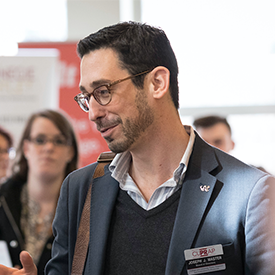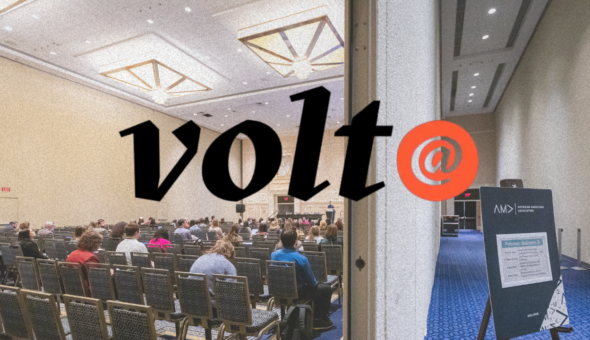
If you are looking for a standard, step-by-step conference recap, look elsewhere. After two years leading on Zoom, CUPRAP board member Joseph Master reflects on what made CUPRAP 2022 so special—and how the future looks just a little brighter in its wake.
I want to talk about hope and how hope can lead to healing.
Recall the gratitude you felt when sun touched your skin on the first warm day after those endless winter doldrums. Or the anticipation of the first snowfall after months of summer heat. Your senses were heightened. You noticed the beauty of the horizon—the same one you’d forgotten to look at for months.
And. You. Smiled.
That’s how I felt for the entirety of the 2022 CUPRAP Spring Professional Development Conference, held March 16-18 in Lancaster, Pa. For so many of us, our last professional development experience—perhaps our last experience in a large gathering of any kind—was the 2020 CUPRAP Spring Conference, which ended March 6, 2020, the week before our world stopped spinning. We went home to figure out how to engage at a distance, behind masks, boxed in on screens that made us feel more self-conscious and withdrawn than we ever thought possible. Some of us had to lead teams and agonized over how to inspire others despite struggling with the same ennui. Some of us looked for strong leadership that never developed or institutional vision to correct our shared astigmatism. We all have been forced to look ourselves in the eye on Zoom, while simultaneously trying to look at each other, and it has been painful.

That’s exactly what our institutions did, too. They looked painfully inward, while needing to look outward at the same time. They formed task forces and hired consultants to help us address issues internally. And they knew that every other institution was following the same exercise. That aching self-reflection picked the scab of historic and systemic wounds that we had been scratching in near solitude for two years. Because the horizon for our colleges and universities became a picture on our walls, rather than a goal for our future. And we stopped feeling as empowered by those historic tethers of mission that used to bind us.
So, as we all walked hesitantly into the conference hall at the Lancaster County Convention Center, wondering what to do with our masks and how to navigate our handshakes, we wanted so badly for it to work. We wanted our colleagues to accept us with the nonverbal cues we used to master so well. We longed to make eye contact, to hug, to share our stories. We wanted to feel comfortable with each other after 740 days being uncomfortable in solitude.
It was beautiful.

The CUPRAP Spring Conference was a success, because we willed it to be a success. We put away our insecurities about ourselves, our fears of the unknown, our worry about stepping backwards in time to a world we doubted could exist again. And, for three days, we truly connected.
We asked Jeff Selingo during the opening keynote how to heal societal wounds through the power of higher education, and he spoke truth about our shared challenges. But his words didn’t cut painfully like a sword. No, it was something different.
Because wise words don’t cut. They help us heal.

In each subsequent session, we shared something that you cannot bottle or commoditize. We talked about the way forward. For the first time in two years, we shared our grand vision for our shared horizon. None of my conversations with colleagues were transactional interchanges or platitudes. It was all about our future, the future of higher education, and what we can do to make it better across institutional, state and international lines.
And something changed—at least in me. I felt that beautiful confluence of belief and expectation, of endorphins and enkephalins, those invisible and mystical transmitters of something I have wanted to feel for a very long time.
Hope.