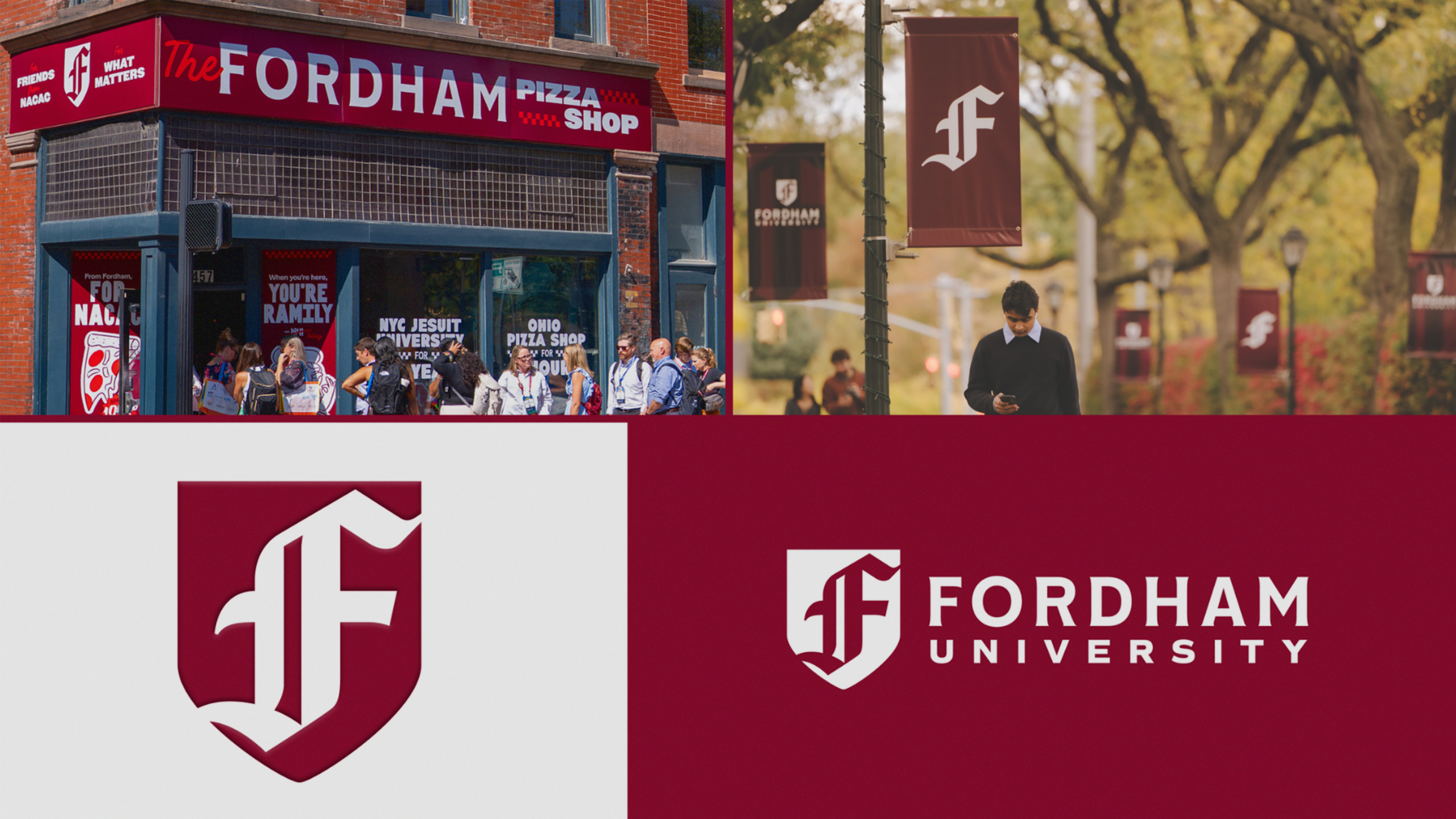
For one day last October, Fordham University’s marketing and communications team turned a Columbus, Ohio, pizza shop into a slice of New York City.
Hundreds of high school counselors and college admission professionals formed a line around the block. They were in Ohio for the 2025 NACAC Conference, the largest annual gathering of college admissions counselors in the nation. By creating the pop-up Fordham Pizza Shop, we shared more than a free lunch with conferencegoers. We gave them a sense of the close-knit community and New York City energy that make Fordham special.
Listen: The story behind Fordham’s pop-up pizza shop
The result? We’ve already seen a 47% increase in undergraduate applications from high schools whose counselors stepped inside our shop.
That might seem like an ‘overnight’ experiential-marketing success, but it was two years in the making. It’s just one highlight in a process that began with a division-wide reorganization and high-stakes brand overhaul. We executed both simultaneously, just as the demographic cliff began to loom over Fordham and the rest of higher education.
In an era when the pool of prospective students is shrinking and the value of a college degree is under a microscope, a 185-year-old brand cannot afford to stand still.
The Listening Tour: August 2023
Successful rebrands aren’t about starting from scratch. They are an evolution—building upon strengths, traditions, and core differentiators to deliver an authentic story that lends true distinction.
When I arrived at Fordham University as the inaugural vice president for marketing and communications in August 2023, my first objective was to engage in a lot of listening. I met with marketing and communications colleagues, faculty, staff, students, families, deans, fellow members of the president’s cabinet, alumni, donors, and employers of Fordham graduates.
Fordham has an incredible story. But after more than 200 conversations, it was clear that there was no consistent elevator pitch or way of telling that story. I asked everyone “why Fordham?” and every answer I heard was compelling but typically took 10 to 15 minutes to unfold.
Those early months of conversations, coupled with a thorough review of data and operations, led me to identify two priorities:
- Priority 1: Structural Agility. Turn a talented but fragmented shop, with independent communications and marketing operations, into a modern, agency-style University Marketing and Communications (UMC) team.
- Priority 2: Narrative Unity. Distill the many incredible Fordham stories into a singular, authentic brand narrative that resonates with the 20-plus audiences that we wake up thinking about daily, from prospective students and families to alumni and the media.
By May 2024, UMC proceeded with a reorganization plan that has aligned incredibly talented teams into an operation reflecting an agency model. We clarified roles, unlocked creativity across the division, and introduced data-driven decision-making, thoroughly modernizing our practice. Simultaneously, Fordham kicked off an RFP process to handpick an agency partner to help us evolve Fordham’s brand. Undertaking a reorg and a rebrand at the same time is ambitious, some might say crazy. But we needed to move swiftly in advance of the headwinds now banging on the door of every institution of higher education.
Watch: Dear Jaime: Is a centralized marcomm function always the best approach?
Building a Brand Platform: Research, Development, and Testing
While Fordham had been engaging in research exercises in every corner of the institution for years, the university had never undertaken a comprehensive audience research study. So, this is where we started.
Through the RFP process, we proposed a three-phase plan for the rebrand: (1) Audience Research, (2) Brand Strategy and Platform Development, and (3) Market Testing and Optimization. Research and platform development are standard practice, yet many higher-ed brands skip over market testing and optimization to save budget and get into market faster. However, after years of agency experience leading rebrands across numerous sectors, I knew testing and optimization were a must for Fordham — not just to ensure we got the brand strategy right, but to help drive buy-in from stakeholders across the institution.
Fordham tapped Ologie as our agency partner to help us navigate the brand evolution. Going into the audience research process, we didn’t know exactly how extensive the rebrand would be. However, after 8,600 audience intercepts over six months, including both qualitative and quantitative research, it became clear that Fordham needed to overhaul the brand and introduce its first-ever brand platform.
Insight: When commencing a rebrand project, it’s easy to jump to assumptions as to how extensive the rebrand should be. Instead, let audience research inform the scope—whether that’s a simple brand refresh or development of an entirely new platform.
Four key themes surfaced from our audience research:
- Distinctive Pillars of Student Support: In comparison with a competitive peer set, Fordham was the only institution perceived to have the following three attributes: (1) a caring community, (2) strong mentorship and academic support, and (3) great educators dedicated to student success.
- NYC as a Competitive Driver: Access to New York City remains a top motivator; prospective students who prioritize urban access and city resources consistently rank Fordham high in their selection set.
- Enduring Value of Our Jesuit Identity: Fordham’s Jesuit identity remains core to the institution’s secret sauce, and audiences acknowledged that our Jesuit mission must remain central to our brand.
- Prestige Perception Gap: While we knew there was a general ‘prestige gap’ compared to our completive set, we discovered something more worrisome: Unaffiliated prospective undergrads (those not in Fordham’s marketing funnel) were twice as likely to view Fordham as ‘very prestigious’ (39%) compared to those prospective students we were engaging in our enrollment marketing funnel (21%).
Leveraging these and other audience research insights, we identified Fordham’s unique value proposition by mapping our authentic strengths against market desires to establish a distinctive brand positioning. Our verbal identity came to life through voice and tone, including a new brand narrative, personality characteristics, and personas shaping how the new identity would flex across different audiences.
Why Market Testing Is a Must
Next, we shaped a big idea into a new slogan, which was brought to life through a visual expression. It was at this point that we paused to test the full brand platform. What our testing unveiled surprised us: The new platform didn’t test as well as we needed. This created a huge inflection point — do we simply optimize the new brand and move on, or do we completely implode the big idea and visual expression to start over?
Insight: Rebranding takes significant time, resources, and investment. Be sure to incorporate testing and optimization as part of your brand development process to ensure the brand evolution connects with your audiences before going to market.
With full support of our agency partners at Ologie, we decided to start over. Within days, creatives crashed the project and we surfaced with what we know today as our new slogan — “For What Matters,” supported by a revolutionary visual identity that is authentically Fordham. After testing the reimagined platform with additional focus groups, we knew we had a winner. While Fordham will always be the Jesuit University of New York (and that continues to be our tagline), last summer we introduced “For What Matters” as our new slogan, underscoring what makes Fordham distinctive: our role in doing good that becomes greater in the world.
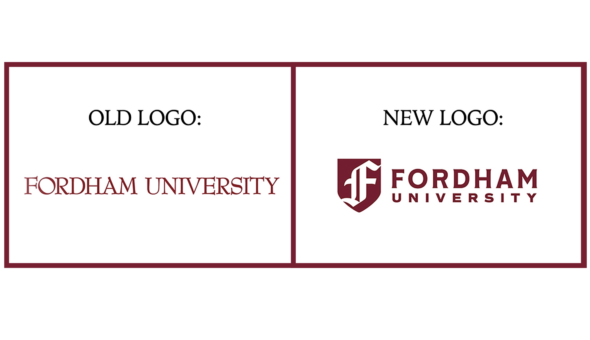
Throughout this process of testing and revision, we created a new logo architecture for Fordham. We elevated Fordham’s beloved seal to keep it as part of our identity system, while removing it from the primary mark. To pay homage to the seal, Fordham’s history and traditions, and the distinctive architecture across our campuses, a new Gothic F logo was born. The Gothic F is a distinctive, timeless icon informed by historic architectural details found across Fordham’s campuses—such as campus gothic arches—blended with a symbolic shield pulled from the university’s seal, lending a mark that is grounded in rich history and intentionality.
Read: 10 great college and university logos
While Fordham’s prior logo system was created well before the internet and wasn’t working across today’s digital landscape, we also wanted one logo system to serve both the academy and athletics, creating a singular identity to maximize brand equity — a process many higher ed marketers dream of. The result was a new logo identity that is authentically Fordham, with modernized functionality.
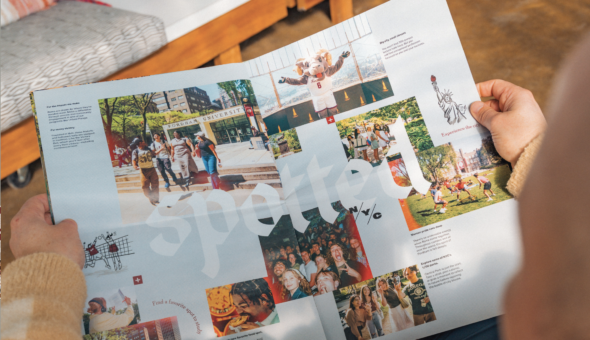
Introducing Our Evolved Brand to the World
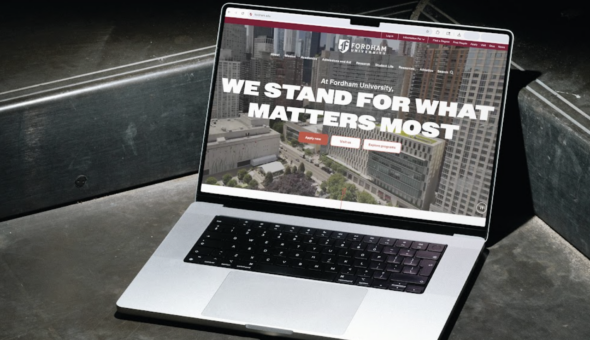
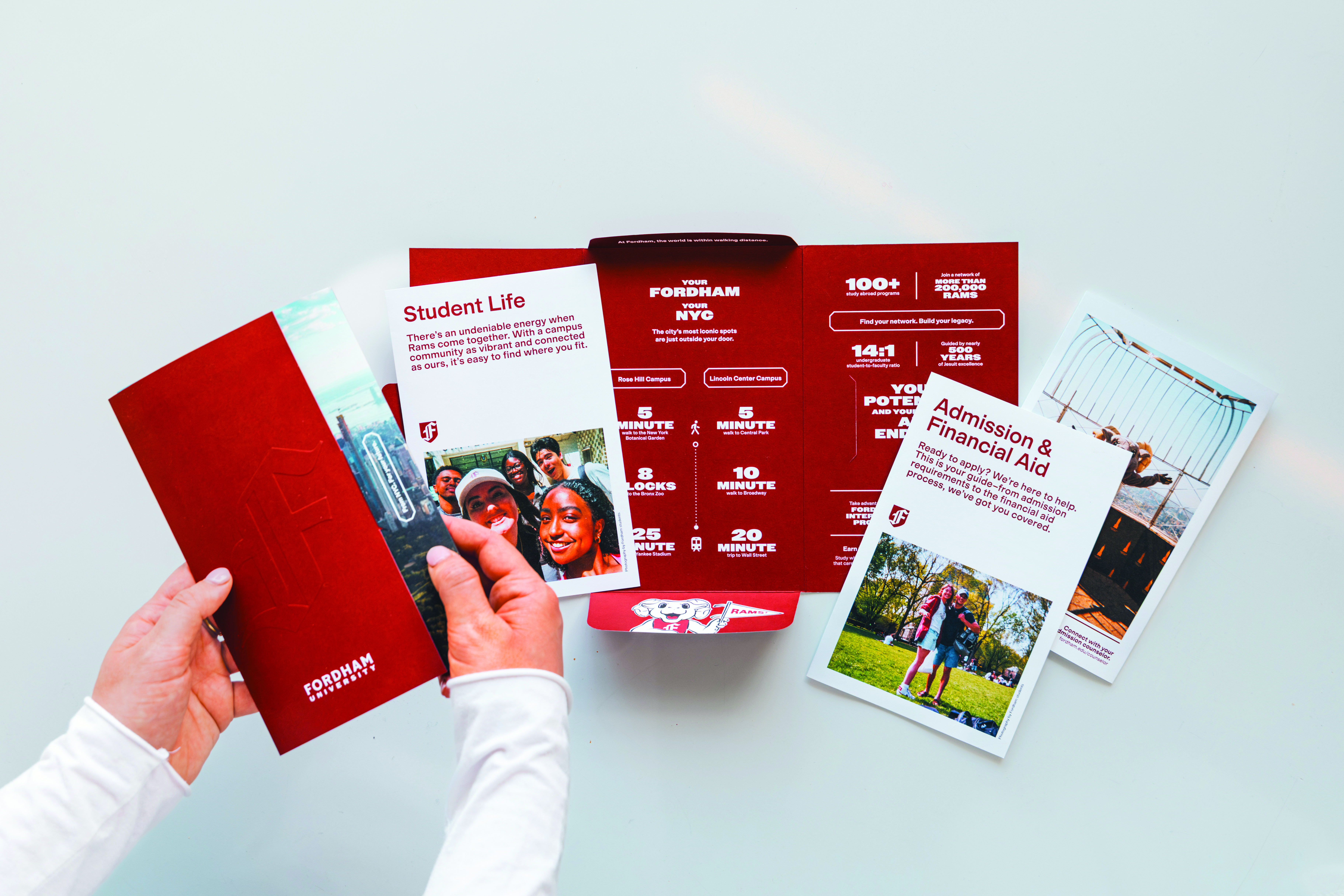
Fordham launched its new brand platform in summer 2025, collaborating with the Office of Undergraduate Admission to overhaul its recruitment strategy. That has included a reimagined web experience, new email marketing campaigns, innovative new direct mail and college fair collateral, and new paid advertising. The evolved brand identity and new enrollment marketing strategy are already showing great ROI. Fordham is on course for a record-breaking year in undergraduate applications (up 25% over last year), and the university is becoming more selective, resulting in a decreasing admit rate.
While we continue to optimize brand adoption across the university, our go-to-market strategy includes evaluating how best to reintroduce Fordham to people who shape the enrollment marketing funnel. Guidance counselors play such a critical role in helping high schoolers make their college plans. While Fordham has always had strong relationships with hundreds of counselors, we wanted to expand our reach, especially outside the Northeast.
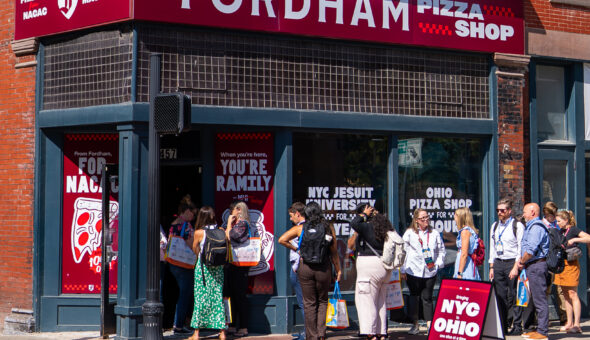
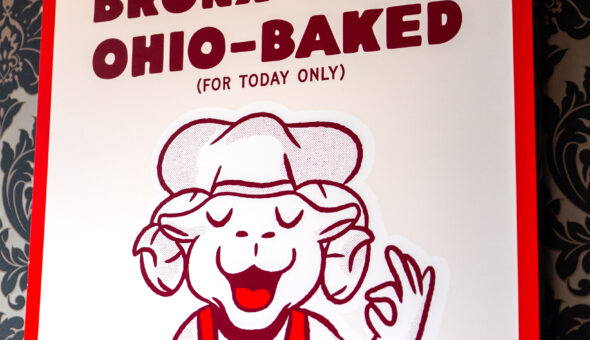
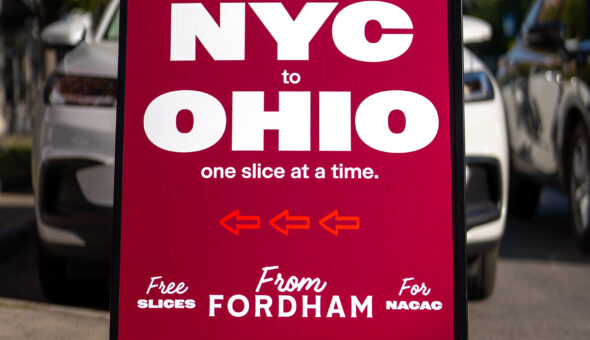
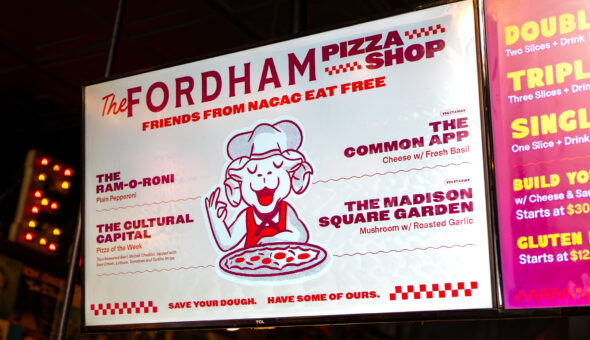
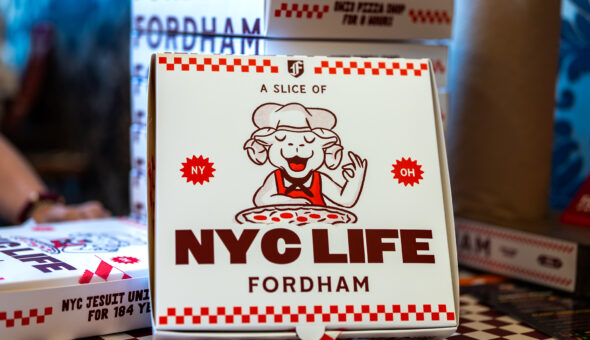
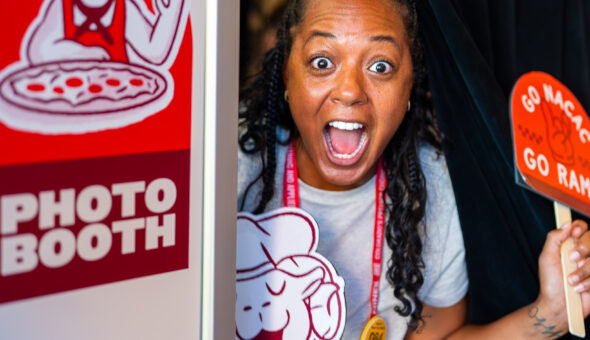
Tapping into experiential marketing, popular among consumer brands but underused in higher ed, was Fordham’s way of making a splash in a crowded market. We noticed that nearly 7,000 people attending the 2025 NACAC Conference, would be on their own to find lunch over a short midday break. Since many high school counselors can’t make it to New York City to visit Fordham, we saw an opportunity to bring Fordham to them. We took over a New York–style pizza shop directly across the street from the conference and set up the Fordham Pizza Shop pop-up, complete with live DJs to create a true NYC vibe.
Insight: New to experiential marketing? Start small, learn, and scale. Think about existing in-person experiences, such as campus visits. Seek to make those in-person experiences more personalized and memorable, delivering a differentiated experience that separates you from other institutions.
During the midday break, the Fordham Pizza Shop had a line around the block. We welcomed just shy of 1,000 guests in a single day. And while ROI on experiential pop-ups is typically long range, we’ve already seen a 47% increase in undergraduate applications from high schools whose counselors engaged with the activation, plus a 49% increase in applications from Ohio. Most importantly, by engaging directly with guests, we established and strengthened bonds that can’t be built through emails or webinars alone.
So, what’s next? We plan to continue to lean into experiential marketing to create unique experiences for audiences where it makes sense. And we just might see those counselors again in October at the 2026 NACAC Conference in Minneapolis.