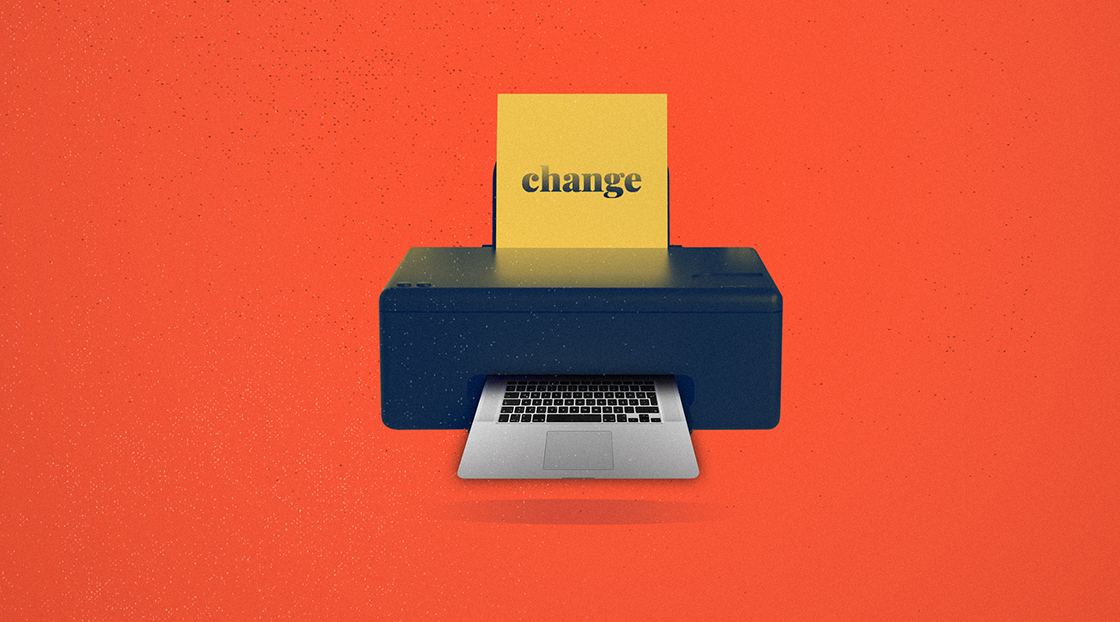
For most people, change is uncomfortable. In higher education, it sometimes seems as though we are distinctly structured to maintain the status quo. The wagon tracks that circumnavigate an academic year are easy to steer into. Our tires slip into those ruts with ease, and we find ourselves doing things the way they have always been done. Year after year, many marketing offices dust off their project plans for the last year and ask the question: What needs to change?
Frankly, probably everything.
Higher education is often structured to defeat change. Our highly siloed organizations and often-rigid hierarchies can make true innovation a challenge. Collaboration is stifled by those structures—and it is further hampered by the sprawling nature of our campuses. “Out of sight, out of mind” is a reality when considering involving others in conversations and bringing more voices to the table.
If COVID-19 has had a silver lining, it is that we have been forced to do everything in new ways. How we conduct business has shifted to allow for remote work and digital collaboration. We have had to find new ways to engage with each other and with our audiences. And out-of-sight, out-of-mind can’t apply when working remotely – unless your dog happens to have an excellent head for marketing and her pulse on the motivations of Gen Z. (My dog calls it “Barketing.”)
All of these virtual collaboration tools are not just unlocking our ability to work together; they are also unlocking our creativity. When faced with a challenge that would have been handled by walking into someone’s office, we are forced to MacGyver a solution that takes into account that our colleagues may not even be in the same state.
What excites me are the possibilities. We have an opportunity to draw from what we have learned throughout this pandemic and apply that to our marketing efforts. The past year has forced us to rethink events, reinvent search materials, identify new communications channels, and create materials that respond to new questions. What else can we whiteboard into reality? If we look at all our marketing challenges with fresh eyes, what can we create that takes our efforts to the next level?
There has never been a better time to change everything. Let’s seize the moment.