Higher education has always been political. What’s different now is where, and how, that power is being exercised.
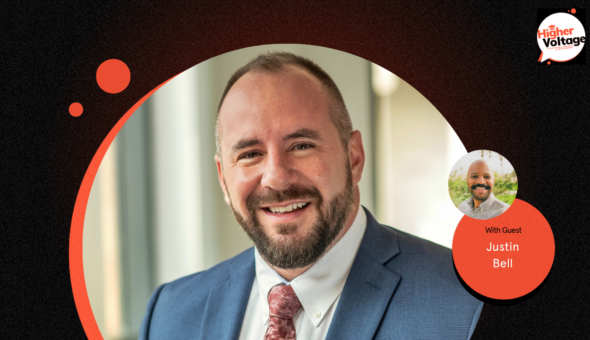
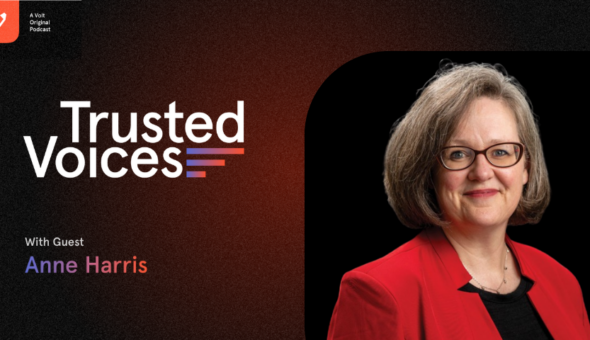
In this episode of Trusted Voices, Teresa Valerio Parrot and Erin Hennessy are joined by longtime governance scholar and dean Michael Harris for a wide-ranging conversation that makes one thing clear: The center of gravity in higher ed decision-making has shifted decisively to the states. And it’s not drifting back anytime soon.
From closed presidential searches to the outright elimination of tenure, state legislatures and governors are no longer nudging institutions from the sidelines. They’re reshaping governance structures, board authority, and leadership pipelines in real time. Harris points out that what once felt unthinkable — executive orders replacing legislative debate, boards acting as political agents rather than institutional fiduciaries — is now becoming normalized.
The discussion traces how this plays out across the country: Florida and Texas setting early precedents, Iowa emerging as a bellwether, and states like Idaho and Utah reducing transparency in presidential searches under the banner of “efficiency.” The result? Presidents starting their roles with trust deficits, faculty and staff locked out of decision-making, and campuses bracing for governance whiplash every election cycle.
But the episode doesn’t stop at governance mechanics. It zooms out to the underlying driver: power. Not just ideological power, but electoral math. As Harris argues, attacks on higher education increasingly mirror broader efforts to influence who votes, where students live, and how politically engaged campuses can be. Knowledge still matters — but who controls it, and who benefits from it, matters more.
The conversation also tackles accountability, from public-health readiness on campuses to higher education’s conspicuous silence around the Epstein files. Other industries are investigating. Higher ed, largely, is not, raising uncomfortable questions about transparency, ethics, and who institutions protect when scrutiny hits.
And yet, the episode closes on a reminder worth holding onto: students. Amid all the policy fights and political pressure, today’s students remain engaged, curious, and ready to lead. The challenge for higher education isn’t whether this era will pass. It’s whether institutions are prepared to lead — openly, credibly, and with purpose.
Show Notes
- Idaho: University president search bill easily clears Senate
- Florida: Florida selects another politician to lead a public university
- Iowa: A ‘Barrage of Bills’ Would Overhaul Higher Ed in Iowa—If They Actually Pass
- Oklahoma: Tenure Will Be Eliminated at Most of Oklahoma’s Public Colleges, Governor Says
- North Carolina: N.C. Elections Board Rejects Campus Polling Centers
- Inside the Conservative Campus Revolution How Charlie Kirk’s youth movement was overwhelmed by darker forces after his death.
- ACE Experience
And speaking of… Higher ed and the Epstein files
- Here’s What the Latest Epstein Files Say About His Ties to Higher Ed
- Even More Higher Ed Names in the Epstein Files
- UCLA professor discussed students, class with Jeffrey Epstein, DOJ documents show
- Gelernter tells dean he stands by praising student’s looks to Epstein
Read the full transcript here
Teresa Valerio Parrot
Hello and welcome to the Trusted Voices Podcast. I’m Teresa Valerio Parrot alongside Erin Hennessy. And in each episode, we discuss the latest news and biggest issues facing higher education leaders through a communications lens. For these conversations, we’re often joined by a guest who shares their own experiences and perspectives. But we also make time for one-on-one conversations about what we’re seeing, hearing, and thinking.
Trusted Voices is produced by Volt, the go-to news source for higher education leaders and decision makers. Remember to visit Volt at voltedu.com and Subscribe to Trusted Voices on Apple Podcasts, Spotify, YouTube, or wherever you get your podcasts to make sure you never miss an episode.
Erin Hennessy
Hi.
Teresa Valerio Parrot
Hi, happy February.
Erin Hennessy
Happy February to you and happy February to our special guest who we are not treating as a special guest today, Michael Harris.
Teresa Valerio Parrot
He’s special, but he’s not a special guest. He’s a special friend because I think we’ve had only just a handful of episodes where I haven’t mentioned him or you mentioned him.
Erin Hennessy
Probably, probably. So gird your loins, Michael Harris.
Michael Harris
I don’t know what I’m gonna do when I have to now listen to myself instead of listening to the two of you go off about the latest insanity in higher ed.
Erin Hennessy
Well, you’re in the Thunderdome now.
Teresa Valerio Parrot
Yeah, so what’s new everybody?
That much, huh?
Erin Hennessy
Yeah, please note, I’m taking a big drink. I’m taking a big drink.
Teresa Valerio Parrot
Okay, it’s Love-You-ary, per my Hallmark channel.
Erin Hennessy
Ugh.
Michael Harris
There is nothing I could hate more than having to listen to more about Hallmark Channel information. My brother-in-law is obsessed with the Hallmark Channel and every time I want to, you know there’s a football game on, you could watch instead and yet here we are.
Erin Hennessy
I think we should have had your brother-in-law on because I have lot of questions.
Michael Harris
Oh it would have been a much more interesting episode, I promise you.
Teresa Valerio Parrot
So Michael and I have talked about the Hallmark Channel now for what, five years? That’s probably right. Yeah, much to his…
Michael Harris
Since you made me read a paper in class about the Hallmark Channel in higher education.
Teresa Valerio Parrot
That’s correct. That’s correct. Mm-hmm, yeah.
Erin Hennessy
Sweet Lord.
Well, we should probably officially introduce Michael Harris, Dean ad interim of the Simmons School…
Teresa Valerio Parrot
Not ad hominem, which I keep…
Erin Hennessy
Yeah, habeas corpus and whatnot at Southern Methodist University, who was a faculty member when you were pursuing your doctoral degree.
Teresa Valerio Parrot
Yes, I was…he was the program head and then he was chair. And so I was the student who was a total pain in his ass, including asking for a full breakdown of fees that I then went back and forth with him many, many times and was able to get a couple more lunches for my cohort. You’re welcome, cohort.
Michael Harris
And I would also say when you have certain students in a cohort, you know who those students are going to be. When you send out information, somebody is going to immediately be the one to raise their hand and have 19 questions. And you just hope that person’s absent that day. And Teresa every time was there and raising her hand first.
Erin Hennessy
Of course. And no one who has listened to even one episode of this is surprised to hear that in the slightest.
Michael Harris
Not even a little bit. Not even a little bit.
Teresa Valerio Parrot
I agree and as a result, what I loved about, and Michael is one of the reasons I chose SMU, plug for SMU, because I chose SMU based on his scholarship and Sondra Barringer scholarship and how it intersected with what we do. So he focuses on presidents, governance. She focuses on boards and governance. And that was where I knew I needed to get my degree.
Erin Hennessy
Well, there it is.
Michael Harris
And then I had you, the only one class we had together was your last semester and senioritis had kicked in. And so it was just now right out to the finish line.
Teresa Valerio Parrot
And so I wrote about the Hallmark Channel. Yeah, it’s fantastic. There we go.
Erin Hennessy
Well, Michael, since you’re the expert, tell us what’s going on.
Teresa Valerio Parrot
Ha ha ha!
Michael Harris
You know, I…
Erin Hennessy
This is nice. I’m just going to sit back.
Teresa Valerio Parrot
He’s ad-expert-et, I don’t know.
Erin Hennessy
That’s right.
Michael Harris
Yeah, because if you don’t have a little Latin in your title, do you even really have a title in higher education?
Teresa Valerio Parrot
Ooh, that’s a goal for us today.
Michael Harris
Well, and I would say one of my favorite things, so I went to Penn for my graduate work and the diplomas at Penn are in Latin. So I have no idea what my degree actually says, but it’s in Latin, which seems fancy. So, you know, at least we have that going for us.
Teresa Valerio Parrot
Very ivy. Yeah.
Michael Harris
Very, very own brand. You know, I, you know, thinking about 2026, you know, on one hand, I keep thinking what’s got to be better than 2025, right?
Teresa Valerio Parrot
And spoiler alert, so far not.
Michael Harris
So far, it just feels like Groundhog Day, which just passed. it just feels like here we go again with, you know, I do feel like one of the differences thus far is it feels like the game has moved a little bit out of DC into the States. And it feels like some of the same issues, some of the same ideas have now started filtering to the States, but that does seem like. Yeah, maybe a little bit, the playing field may be switching there or going back to right, given that that’s where historically so much higher ed policy and decision work has happened. But that, that feels like to me where things have kind of transitioned a little bit in the new year, but I don’t know. You all do this for a living. What do you, what do you see?
Teresa Valerio Parrot
So that was one of my predictions for this year. And I have a number of thoughts on that that we’ll talk through, and you all have thoughts too, that this was going to be a year where we were going to see states really carrying the water on reforming higher education. So check, this one’s already well underway. And we knew it would be based on what state legislatures were going to propose. And they have not let me down. So that prediction is very, very much alive.
Erin Hennessy
Yeah, I was just idly scrolling BlueSky last night and saw the Chron’s piece on the proposed change to tenure in Oklahoma. Not so much a proposed, I mean, I guess it is a proposed change, but the proposal to end tenure at most public institutions in Oklahoma. And I think that’s sort of been a fever dream for a lot of folks on the right for a number of years. But I’m surprised honestly that it’s taken us this long to see it pop.
Michael Harris
And the fact that it required an executive order, right? It was not something that could get through the legislature, but we try to do it by executive order, which again, to me is a lesson from DC. Can’t get it through Congress, do it by executive order.
Erin Hennessy
Yep.
Teresa Valerio Parrot
Well that’s exactly where I was going to go with that is that we’ve seen these sorts of proposals, especially last year, come up in a number of states. And this is what happens with legislative seasons. What happened in some states last year is going to happen now in other states, and they’re going to build off of why it didn’t pass. But the difference here is it hasn’t passed in multiple states over multiple years. And so they really are saying, OK, how do we get this to the finish line? You have the governor do it. And I’m curious to see, especially because this is a midterm year, what other governors are gonna say, oh that’s how I get this across. And this is how I can then say, I’ve done this as we go into elections.
Michael Harris
Well, and I think it’s too using, you know one of the lessons I think governors have learned over time is how to use their board appointments to implement their political agenda. And so, right, even though this executive order, you know, as we’re recording, it’s just kind of happened. There’s every reason to believe the board is going to follow because the governor has appointed virtually the entire board at this point. And so they’re, they’re in essence, an agent of the governor rather than I would argue a fiduciary of the institution and what might be best for the institution that may or may not align with the governor’s political preferences.
Erin Hennessy
Yep. And obviously Virginia is where we have seen that most visibly.
Michael Harris
No question.
Erin Hennessy
And Governor Spanberger, who’s been in office maybe a month, has already moved to unwind a number of appointments that were sort of, that were already made, driven by Governor Youngkin. She’s also considering, or there’s legislation that’s been introduced in the general, in the Senate, I believe, the state Senate, that looks at how trustees and and rectors are appointed across the Commonwealth. So she’s moving to to codify that in law following all of the hue and cry over what Governor Youngkin did and and the AG’s opinion that said trustees serve the Commonwealth not the institution. So we we’re seeing that pendulum swing and while I’m pleased to see the change happen in Virginia. I just can’t help thinking about all of the stalled momentum that is involved in undoing the current appointments, refilling those seats, training those new board members. And then potentially in Virginia, it’s a single six-year term. Are we right back in the same spot in six years? And what does that do to an institution that sort of every six years has to take a big breath and wait and see what happens?
Teresa Valerio Parrot
And it’s worth doing. It’s the work that’s worth doing, right?
Erin Hennessy
Sure.
Teresa Valerio Parrot
So you have both this governor involvement, you have the trustees who have been appointed either by the legislature or by the governor in very few states are they elected. And then we also have the layering on of who gets hired as presidents. Link that we’ll have in the show notes is there was a really good just catch-all of different hirings and transitions. And one of those that I wanted to flag was the University of West Florida, which made its interim president, its permanent president. And the way that that person continues to be characterized, true or not, just going with how it’s being reported in the media, is that this is a DeSantis friend. He is a former politician and it feels like another DeSantis political appointment versus perhaps a higher education appointment. So again, the action right now is at the state level. And I think who we’re hiring, where we’re hiring them, where they come from, and if you will, what their other duties as assigned look like, I think is critically important.
Michael Harris
Well, and I actually think this is one that hasn’t probably gotten enough attention in higher ed, because one of the things I think you have seen in Florida and Texas, both, Texas has appointed a Texas tech, one of the major legislative critics of higher education as president.
Teresa Valerio Parrot
Yes.
Michael Harris
Florida and Texas, certainly among the red states have been, what for almost a decade now, really acted as really at the front and center. And I think a lot of other states have kind of followed behind that lead. And so I, one of my concerns is not just the implications for Florida or Texas or those institutions, but is this now going to set a trend where we’re going to look much more to direct higher education by not just boards, which we’ve clearly been doing for a minute now, but now through the presidency as well. And if that becomes a mechanism to try to drive an institution towards a political end, you know, essentially the fox is in the henhouse at that point. And so I do think that trend has not nearly gotten enough attention for what it might mean over the next five years as states might try to do that same mechanism.
Erin Hennessy
Agreed.
Teresa Valerio Parrot
Still looking at the states, Idaho, the state Senate voted to move presidential searches predominantly behind closed doors, which a number of states have done, to be honest. That’s not a red state, that’s not a blue state. I’m in a blue state. It’s here too. And it’s normally said so that you don’t scare off the finalists, right? But by moving, by the legislature voting to move and give freedoms for these to happen behind closed doors, you reduce the transparency of how these people were selected and you have the potential for exactly what you’re talking about in Texas and Florida.
Erin Hennessy
And Utah has also just completed its first presidential search that was completely closed because of recent legislation that was passed there as well.
Teresa Valerio Parrot
Yeah, so we’re seeing the additional layering in a number of different ways.
Michael Harris
And this is a, it’s such an interesting example because on the one hand, right, there, there is a lot of logic to why you would not want a broadly public search to be, as you said, to recruit top candidates, particularly who may be sitting president somewhere else, and they don’t want to burn their home institution while they might be looking at another opportunity. That’s a perfectly sound logical thing to do. And there would be good reasons to do that. But I suspect in a number of these cases, that’s not the reason, maybe the stated rhetorical reason, but it is to drive a political end to the search process rather than try to get the best, most qualified candidates to get a particular type of candidate.
Teresa Valerio Parrot
Which is again, that’s where we are in Idaho. Let’s see where that, as we just mentioned, it’s gone across the country. What other states don’t yet have that? And what does that mean for having the kind of searches that suggest that shared governance and community input matter?
I don’t know. What do you think about that, former faculty Senate chair?
Michael Harris
You know, it’s so we went through a presidential search last year and there were a number of faculty here, right? Private university. It’s obviously a different animal. We got a lot of faculty. Why are there not going to be public forums for us to meet the candidates and all that? And, know, I kind of explained the reasons why, right? Like there are good reasons why if you want to particularly get a sitting president, which we ended up getting someone who was a sitting president, you want to do this. I think there, you know, to use one of your favorite words that y’all talk about on here a lot, trust. Is there trust between campus constituencies and boards, particularly in these states where boards have become more activist and more political? There is a lack of trust in what that process might look like and who’s going to be making the decisions. And is it even the board or is it the governor? I think clearly in Florida, DeSantis, whether he’s not on the search committees, but he’s clearly has a major hand in the outcomes.
And so there is, think undoubtedly a breakdown in the trust so that a process that is more closed, right? Whether real or perception, the lack of trust there, I think really undermines the process. And even if you get a quote unquote good candidate at the end, they’re starting with one hand tied behind their back because they came out of a process that, you know, at best was pretty secretive and at worst, you know, was collusion. And that’s, that makes it really difficult to try to be a president when you start essentially, you know, with two strikes when you come to the plate.
Teresa Valerio Parrot
Yeah, I think there’s something so fascinating about where we are as well. I’ll be curious because I’m a policy wonk at heart, if we start to see shifts in job descriptions. And if your institution doesn’t have job descriptions for your board members, this is a perfect time to create those, especially as Erin, you were talking about what’s going on in Virginia and what was reported. And that is, does your board know what their purpose is?
Erin Hennessy
Right.
Teresa Valerio Parrot
Because they took an oath of office or because they need to be reminded of that tie to the mission and the work on behalf of, in essence, the students, right? It might be the citizens, but really it’s the students in the community.
Erin Hennessy
Yeah.
Michael Harris
Well, I think there’s another really interesting example about Virginia because Virginia, because of the way they do their governor’s terms, right, there’s been a bit of a moderating impact because you don’t have, you know, governors like in the case of Texas, where we don’t turn limits, the governor stays there long enough, they appoint the entire board and kind of set the overall direction for 15 or 20 years. What’s also interesting is when you have a case now, like with Spanberger, who was clearly telegraphing her preferences as governor-elect.
Teresa Valerio Parrot
Yes.
Erin Hennessy
Right.
Michael Harris
And the Charlottesville board went ahead and put a new president in place. What does that mean for that president? Right? So there are these interesting dynamics that we don’t often think about in higher ed, but the more political boards become, turnover in the governor’s office has much more direct impact. So, you can make an argument the board should have appointed a president and that would, in the best interest of the institution to get a decision. But that was clearly in violation of what the governor-elect wanted. It was about to be governor, what four, six weeks out when some of that was going down, I think? You know, I think that’s the only thing, the closer higher ed gets to the political process, it becomes susceptible to these lame duck periods after elections and huge swings. There’s a reason higher education institutions need to have some autonomy from that process. And whether you like the outcome or don’t like the outcome, this shows the problems when higher ed is that tied to the political process.
Erin Hennessy
Right. Yeah. And even down to something that seems so small, like having staggered terms of service, you know, the George Mason board was in this spot where they weren’t able to achieve quorum because they had so many empty seats and they were being held up again, rightly or wrongly by, members of the legislature who didn’t want to have additional Youngkin folks appointed right before the end of his term and so Mason just sort of sat there in limbo for a while because the board couldn’t take any action. It’s really, you know, for so long we have thought about governance as these sort of remote folks who set the policy in the direction and, you know, hire and fire the president. But when we get down to it, and Teresa and I, think this has been our theme for this year if we have one, everything is governance.
Every single thing is governance. Every choice that we make, it’s all governance. And when you can’t even achieve a quorum, you can’t even approve meeting minutes. What are you doing to the institution? And, you know, by, by transference, what are you doing to the students? What are you doing to the, the employees who are there who are waiting for direction? And it’s, it’s really frustrating to watch.
Teresa Valerio Parrot
Well, and I think there’s this interesting part where we all keep saying, well, we just need to wait this out or this is, this is the next something. This is our normal now.
Erin Hennessy
Yeah.
Teresa Valerio Parrot
This is where we are and it’s in red states and blue states as we’re talking about. This isn’t just a state or it’s not, we always go to Florida and Texas and Iowa, and I’ll come back to Iowa in a second. It’s not just the states that we usually look to for change. It’s all of the states, all of the legislatures, all of the governors are better understanding the potential power they have over higher education. And as we all three always talk about, the reason that higher education is so important and is always part of these conversations is because knowledge is power. So if you can control knowledge and the transfer and the sharing of it, that is a real superpower that our elected officials can capture.
Campus Docket Promo
Michael Harris
So can I take this in a slightly different direction? Because I have a counter narrative to that point, which I think I agree with you, but I’m not sure I do.
Teresa Valerio Parrot
Yeah, let’s see!
Erin Hennessy
Here we go. I hate when mom and dad fight.
Teresa Valerio Parrot
Well, I mean, we got the memo to dress alike, so here we go.
Michael Harris
So, because I think there’s some interesting stories coming out now around voting in higher education. And so there’s currently a legal case in North Carolina. We’ll have the link to the story about where the college Democrats have sued about voting sites on campus.
Teresa Valerio Parrot
Yes!
Michael Harris
And there’s the Department of Ed has come out criticizing and wanting to investigate Tufts because of the survey that they run around campus voting. I’m not so sure it’s about knowledge.
Teresa Valerio Parrot
Oh, I just think it’s about power.
Michael Harris
I think, well, and I think that, so this is where the part where we agree. I think it’s about power, but I think it’s, I wonder, and I don’t have a lot of evidence for this. This is a little bit of my working theory, but as voters have been segmented by college educated and that college educated voters vote Democrat and not college educated vote Republican, that has been the break in higher education policy.
Teresa Valerio Parrot
Oh I agree.
Michael Harris
Right, so the attacks on higher education aren’t, you know, certainly there is an, you know, authoritarian, you know we see a playbook about attacking higher education in other countries, right? I think there can be an element of that. This to me feels much more like naked electoral politics, that if we can reduce voting sites because college students are going to vote for one party or add voting sites because we know they’re going to vote for one way.
If we can change congressional districts for a gerrymander, right, college students are a huge piece of the gerrymander fight. and, trying to, quote unquote, reduce the politics or the wokeism or whatever higher ed is really to me as much about who college educated people are voting for than it is anything about the mission of higher education or the governance of higher education or the purpose for society of higher education, as much as we three all believe in those things.
It feels to me like this is simply about vote counting and trying to tilt in favor of either party, right? Depending on what state you’re talking about.
Erin Hennessy
Yeah. And add to your list, mail-in voting,
Teresa Valerio Parrot
Yeah.
Michael Harris
No question.
Erin Hennessy
Which is used by, you know, a large segment of our higher ed, of our students. I think that’s also part of, yeah, trying to suppress what is broadly seen as a reliable democratic vote.
Teresa Valerio Parrot
Well, Erin, think you can rest easy because I think, I know that mom and dad agree. I think we’re on the same page and how I’m getting there is that when you go to higher education and you’re exposed to different ideas, right, you start to think knowledge is power in determining how you’re going to assess fake news or not, how you’re going to think about different topics. We encourage people to have the critical thinking skills to dissect issues and then put them back together. And that’s the power that I think I’m talking about, which ties directly into where people might assume that the college educated vote. And I would say again, going back, because this is a state example across the country, Texas has been doing that for years. If I go to the 2020 election, a number of campuses had voting locations on campus and they were taken off campus, including at some community colleges. So it’s not like we were just looking at the AAU type institutions. We were talking about AAU all the way through community colleges.
Michael Harris
And there are undoubtedly attacks on what knowledge is acceptable and what knowledge should get public investment. That’s certainly a thing.
Erin Hennessy
Correct.
Teresa Valerio Parrot
And that’s a legislative topic in a number of states this year too.
Michael Harris
No question, but it feels to me like the bigger driver is not trying to drive. This, it really feels to me like it’s, every, as with most things, it’s about electoral, it’ll about electoral math. Yeah. It’s, it’s, I think it’s more tactical than strategic, right?
Erin Hennessy
I think we’re also going to get to a point and maybe it’s after the midterms when you can sort of pull the, exit data and sort of look at, how the vote shook out. I imagine pretty soon we’re going to be talking about college educated blue state and college educated red state students because we’re seeing states make these choices. And we talked about this the last election when it was really around Dobbs and how states were making choices around reproductive health issues for women in particular. But I read an article this week, we’ll throw the link in the show notes, in New York magazine, which is, you know, a very left leaning publication, but it was a really interesting look at what is happening on particularly Southern public campuses in the wake of the Charlie Kirk assassination and looking at how, young Republicans are shifting even further right post-the Charlie Kirk assassination and seeing that Charlie Kirk wasn’t conservative enough for aligning with their own particular political positions, why students are choosing these Southern public institutions and really finding their peers and their compatriots there. And it was a very interesting piece. So I think, you know, as always, we’re sort of, we’re not at the end of this. We’re not even at the beginning of the end. We are in the middle of a, what I think 10 years from now is going to be a very interesting transformation to look at on our college campuses in terms of who our students are, what their voting behaviors look like, and how they’re making selections, institutional selections based on both of those things.
Teresa Valerio Parrot
And I still would go back to you and I, Erin, had a little bit of a difference of opinion when we were talking way back when in the Dobbs era. And that is, I agree with you. And also, we need to look at sample size. Because when I still visit campuses, public and private Southern institutions, it is still more purple at the very least. And what I would say is this is where we were talking in the Dobbs era. It’s a reminder as well that as we talk about many of these institutions, students are more place bound than we assume. So when students are choosing to go to these institutions, those are the ones who can afford to make the choice and can afford to relocate and can afford some of what most students don’t have as choice. And so let’s look at the sample size and who is the everybody else and where are they? In some ways this feels a little bit to me like when we see the critiques of, you know, a New York Times or a Washington Post piece where they found the five people in a diner who could all agree and are so absolutely red. What is our sample size and what is the temperature with the rest of the students too?
Erin Hennessy
Yeah, absolutely. Like I said, I will be really interested to be able to look at that exit voting data as well as we get closer to the midterms, look at some polling cross tabs as well among that younger subset.
Michael Harris
And I do think this is, I think we can now probably say this is the end of the beginning of this period.
Teresa Valerio Parrot
Yeah.
Erin Hennessy
Yeah.
Michael Harris
And I do think in some ways that was, last year was the end of this idea that, you know, to the point of we’re going to, it’s going to go back to normal at some point. It does seem pretty clear. You know, we don’t know how long this period is going to last, but this notion of the independence of higher education, the increased politicalization of higher education. That’s now what this era, it seems to me, is going to be defined by. And so we don’t know how it ends. But it does seem to me like we’re now out of the period of, we now know what the chess pieces are on the board. Right. Who’s going to make what moves and who wins the game? Right. That’s still to be determined in the second half. But I do think we’re now out of this period. Because I remember even in the 2010s, right, it’s as the Tea Party’s coming about, the 2016 election, you’re like, is this this blip and higher education may go back in the same way post-recessions, right? We would kind of go back in some sense. Never completely the same, but it starts to look like it did before. I now certainly am of the opinion that we’re not going back, at least in this era, to a period where higher education was, particularly in some states, a bipartisan issue. Where maybe it was something that you rhetorically attacked, particularly on the right, but you largely left alone with the right.
Erin Hennessy
Until you needed to, you know, get some, get some additional money and you’d pull money from our budgets. Like that was the, you know.
Michael Harris
Right. And we kind of, and we all knew what that playbook was, right?
Erin Hennessy
Right.
Michael Harris
I think on all sides and you knew how to respond and how to deal with it. They clearly now you, you and you hear lots of higher education leaders saying this, right? We’ve got to, we’ve got to address this question about the value of higher education. What does that mean? We’ve got to look at the research enterprise. What is that going to, right? All of these things now, it’s a reassessment of, and that’s to me why I think that it’s the end of the beginning, because now there’s an acknowledgement of this is going to be fundamentally different. And as someone, who’s, probably the class I’ve taught the most over my career is the history of higher education. One the things I used to tell the students is, right, we have the same fights over and over again. They look a little bit different, right? It’s a fight over, are we going to involve, you know will we include women in higher education, are we going to include somebody other than rich white men? This now feels like a fundamentally different era, right? Where the post-war period is now over. And now it’s what, you know, is the next 30 years, the next 40 years is going to be defined by this politicalization, partisanship of higher education. And that does feel, I think for the first time I would say this, I really fundamentally feel like we’re in a different era. And I wouldn’t have said that until more recently.
Erin Hennessy
That’s a piece. That’s a piece right there, Michael.
Teresa Valerio Parrot
I agree. And I think as we look to Iowa, which I had teased before, we’re seeing exactly what that can be. There was an excellent piece about the barrage of bills that are in the Iowa legislature. And they’re looking at everything from endowment to tenure to who’s teaching what to a whole bunch of things. And it used to be once upon a time that when you looked at what the slate that a state legislature was considering, higher education was just kind of on the edges and small. And now it is front and center for where the fights are being held. And I was talking to the president of Grinnell about this because they are, as a private institution, largely under the radar with the legislature. And this year they are front and center because the state took a state equivalent of the endowment tax legislation.
And they are moving that as something that they’re considering. And she reminded me that state legislatures are very much like a funnel. You’re going to start at the top and there’s going to be a whole bunch of stuff. And even that endowment tax bill has significantly shifted. And it was, I think there were like seven institutions that were potentially targeted. Now they’re down to three. Grinnell is one of them, two publics and then Grinnell.
And she said, you know, we’ll see what happens as this continues to sort, but this is real for not just, publics, but also privates. And she and I have been having significant conversations about how the role of a private institution president has shifted so much in the last two to three years. And this is the examples.
Erin Hennessy
Mm-hmm.
Teresa Valerio Parrot
And speaking of Iowa, they have a couple of other ones that are kind of interesting, including for those who don’t know, there are a number of smaller private institutions in Iowa that a number of people have put on their lists to watch and see if they might close over the next however many years. The legislature is looking to possibly add four year degrees at community colleges in much more significant ways. And the small private institutions are saying that could put us out of business. And the legislature is saying they’re doing so because there’s a teacher shortage as one of many reasons. And, they need to get more people with degrees and able to teach in the state. So Iowa is an interesting state. Right now, I would say Iowa’s the bellwether for me in ways other states have already done stuff and there it’s being replicated. Iowa is in the middle of creating significant change.
Michael Harris
When Iowa’s interesting for a lot of reasons, in part because of its size, right? A lot of the states we’ve talked about with some of this, again, Texas, Florida as kind of your textbook examples, are kind of big and by the nature of the scale of those, it looks a little bit different and drives the conversation differently. But, you know, the endowment tax, I think is a great example. And when you’re thinking about how rural the state is, the urban-rural divide, like Iowa’s really interesting in that way in a lot of places. And how, in some ways you could argue, it is easier to transfer some of those ideas to other states from a place like Iowa than arguably a Texas or a Florida. Because Iowa looks more like other states than Texas or Florida do.
Teresa Valerio Parrot
I agree.
Erin Hennessy
Agreed. Lot’s going on. Can we do like a lightning round? Cause I have a couple of things I just want to throw out there and go, how about this? And then we can just keep going.
Teresa Valerio Parrot
Yeah, I have my lightning round topic.
Erin Hennessy
Okay, my lightning round topic is measles. I am very nervous about measles because we have started to see in states where vaccination is being disincentivized and in other states because higher ed’s all about mobility and people moving around. And while most people stay relatively close, some number of them move around. And so we’ve already started to see outbreaks. There was one at Clemson and there’s one at Ave Maria. Was that the other one in Florida?
Teresa Valerio Parrot
There are a number of them. We are at more than a handful.
Erin Hennessy
Yes. And so the thing that I am thinking about, wondering about, worrying about is what did we learn from COVID and are we ready? Because, you know, we always say higher ed’s great at planning for the last crisis, catastrophe, disaster, whatever. And I’m just hoping that those plans are still on the front edge of the shelf and the dust isn’t too thick on them because I think we’re going to need them. I don’t think measles is going to turn into a COVID-sized pandemic, but I think a lot of institutions are going to end up suddenly having to figure out how to deal with contagious disease outbreaks on a smaller scale. And a lot of us have put away our online education toys and shifted back to in-person because we’re so focused on, rightly or wrongly, what we believe is important for student engagement. And so are we still ready to serve students who may be impacted by stuff like measles and other communicable diseases? So that’s what’s keeping me up at night.
And, know, think about all the ways in which higher ed interacts with the communities around it, but also think about the student athlete who travels however, many hundreds of miles to compete at another institution carries something with them. And then we’ve got another, I mean, it’s contact tracing and all of it. So that’s one I’m thinking about.
Teresa Valerio Parrot
Yeah, I’m on a Slack group of MarComm people, and I have been very pleased to see how many people are sharing their measles plans on those sites, because this isn’t one where it’s proprietary. What can we learn from each other? And I’ve been very interested to hear that one of the colleagues has measles on their campus, kind of how they’re going about it. I think there is a sharing of information that makes my heart happy because we’re all in this together and so let’s be in this together as both information sharers and partners and sounding boards.
Erin Hennessy
I’m also just thinking about the Student Life colleagues on our campuses who are still navigating the burnout from COVID and maybe stepping into another round of burnout related to other communicable stuff. So that’s my lightning round. I will pass the torch to whomever wants to pick it up.
Michael Harris
Well, I’ll go from one extreme of seriousness maybe to a slightly other. I’m fascinated by the SCORE Act in Congress.
Teresa Valerio Parrot
Tell us more, Michael Harris.
Erin Hennessy
Give us a little squib for those who don’t know.
Michael Harris
So, yeah, so for those who don’t know this, there’s been a, for a number of years now, there’s been, the NCAA and rules around athletics have largely been driven by court cases. Some rule will get knocked down, some change will be, and it’s, you’re really trying to run college athletics by what did some local judge who half the time is a booster of the local university has said, this athlete can play. So well, there’s eligibility requirements or, um, know, the house settlement around sharing revenue with, with student athletes, et cetera. I think most people feel like there’s kind of one of two solutions to this scenario in the end. And it’s either collective bargaining, and I’m certainly not a lawyer and I’m not going to play one on a podcast, but I think that’s an interesting one of what that would look like, especially if you want to say that student athletes are not employees. The others though, the idea is that we need congressional legislation. And that can look in various forms, whether that’s some kind of antitrust exemption, like some of the professional sports have, or whether there’s some kind of new definition of a category of not an employee, but not a student, right? Something.
And there was some movement in the house, that looked like the House might pass a version of the SCORE Act. Then it kind of at the last minute derailed is as these things sometimes do, there’s some questions about if it gets out of the House, what would happen in the Senate? You’ve got some, democratic senators in particular, who are kind of pushing kind of from a light pro labor standpoint, some needs for protections of student athletes and even categorization around employees. You’ve kind of got Ted Cruz, he’s kind of got his own set of interesting ideas. But I think fundamentally, while I worry about anything that requires congressional action, given the state of Congress, can we get the SCORE Act out in some kind of way? What would that look like? Because I think any of us who are involved in intercollegiate athletics at any level realize the current system is not working.
Teresa Valerio Parrot
Yes.
Michael Harris
Whether that’s the transfer portal, whether that’s the financial thing, whether that’s coaches, whether that’s timing of football recruiting, lots of problems. It’s just hard to figure out how you fix them. And Charlie Baker has made this point a couple of times, the president of the NCAA, and while I don’t agree with everything he says, this I think is a really valid point. So many of these rules and court cases have been caused by universities who are essentially suing or encouraging their athletes to sue.
And you can’t run a membership organization where the members are constantly suing the organization. And so I just think that’s a fascinating one. You know, I’m doubtful in an election year, much of anything major could possibly happen. But what, you know, if you get the House change over in the midterms, which seems likely the Senate remains closed, like, is there a way to get some kind of legislation out? But it seems to me that’s as challenging as that is, that’s probably the best hope for cleaning up intercollegiate athletics right now. But I’m just fascinated to see how the politics of it comes into play, as in the labor pieces, that’s the House versus Senate, right? I just think that’s a fascinating one to watch. Not as life and death as measles, quite obviously, but…
Erin Hennessy
For some people.
Michael Harris
Right, but interesting.
Teresa Valerio Parrot
So let’s circle. Why are we where we are? And that is because at one point people wanted either really the NCAA to do something, they didn’t, or Congress to do something and they didn’t. So to come full circle, part of why we’re where we are is because different states took it up in their legislatures and passed legislation. It didn’t match across the country. It gave basis for some of these for the lawsuits for differences. And now we’re where we are because it’s trying to fix what happened at the states that should have happened in a different place by different players at a different time. So when we talk about all of this, you know history repeats itself and also let’s think about what those cascading impacts are, even if they don’t seem obvious because you may end up at a SCORES Act situation.
Okay, so…
Erin Hennessy
Bring us home.
Teresa Valerio Parrot
Mine is completely different. I have been so curious about the people who have been named in the Epstein files and have ties to higher education.
Michael Harris
Mm.
Erin Hennessy
Yikes.
Teresa Valerio Parrot
So the show notes will have four links here because it’s definitely something that can take a lot of time to read through because unfortunately there’s a lot. So there was an article in The Chron, there was one in Inside Higher Ed. I’m going to call out two specific situations that seem to be getting a lot attention. There was a UCLA professor who had some emails going back and forth and also a Yale professor who had some emails and is defending himself for how he talked about a student and that he was just kind of meeting the person where they needed to be met. And I think this is an interesting time for higher education as we’re seeing other industries who have people involved in the Epstein files get rid of those people, have accountability for them within their organizations. And in higher education, what I’m seeing is a lot of silence.
Erin Hennessy
Yes.
Teresa Valerio Parrot
What does that mean and why and how is it that higher education? I’m not, I am not judging anybody because I don’t know the specifics. I only know what’s being reported, but other industries, organizations and people are now launching investigations. They’re bringing in HR. They’re looking at their policies and I’m hearing radio silence in higher education, including anybody saying, what are we doing here, guys? What is going on here? We have presidents who are in these emails and former presidents. We have a number of different people. A current president is in there. We have a number of people that, what are we doing as an industry to show that we are equally accountable as other industries when there is something that needs to be investigated?
Erin Hennessy
Yeah. Yes, all of that agreed a thousand percent. And also what has the race for funding done to us that all of these faculty members and, and the president’s former presidents, people who are, who are in there are willing to entertain relationships with people who, and many of these relationships were after his conviction, in order to get access to research funding. It’s…
Teresa Valerio Parrot
Platitudes, because you’re hoping that there will be dollar signs associated with them.
Erin Hennessy
Yeah,theres…higher ed has not covered itself in glory on this front. And it’s, you’re absolutely right. There are no statements. There’s very little being said and it is really disheartening.
Michael Harris
When I had a mentor one time say, the more you move into administration and higher education, one of the hardest things is you learn things about your colleagues you can’t unlearn. And so I think about as much as this, right, is awful, awful for a whole variety of reasons. There’s versions of this that play out on every campus and much smaller scales. And we, we do not, I think, do a particularly great job in higher ed of either figuring out how are going to discipline faculty? How are we going to manage these situations? How do you try to prevent these kinds of relationships? Because even if you were not as terrible person as Epstein was, do I want my faculty engaging with outside donors or supporters or people in this kind of way, right? So I think it exposes certainly the awfulness of this situation, but there’s probably on much smaller scales this happening every, at every institution in the country and how do you try to manage that in a leadership role is challenging at best.
Erin Hennessy
Yeah, and I think, you know, this is not the podcast and I certainly don’t know enough about the topic, but there, we have a long history of some really messed up sexual politics in higher education and it’s always sort of been brushed aside. I mean, Teresa and I were in a room where someone told us, well, we don’t have a policy on faculty-student relationships because in the old days this is how our male faculty members met their wives, was in the classroom.
Teresa Valerio Parrot
And the person said that’s how they met their wife. And he got to hear from two people you know.
Erin Hennessy
Yeah. And, whew. Hoo doggy, you know, it’s, again, we can spend days, but the sort of white male dominated portions of our field and the slowness with which we have adapted to a number of things, I think, yeah, it’s disheartening and gross and terrible.
Teresa Valerio Parrot
Yeah, I would broaden that just to say those who feel as if higher education has made them untouchable. That’s who I would put in that bucket. There’s one topic that I’m going to raise. I’m going to bring us to something positive so we end on a positive because of course I have to. I was at a political event this last weekend and a candidate was saying, everybody was really piling on like we’ve done with, here’s all that we need to be worried about and how are you thinking about this and what does this mean? And he stopped everybody and he said, I need everybody to do me a favor. I need you to go and talk to a high schooler or a college student and just hear what they have going on and what they’re doing. Because what we are forgetting, people are saying, what’s the future of our country and of our state and on and on and on. He said, what we’re forgetting is that we have amazing students who are out there doing amazing things. And when I hear people who get so wound up and so upset, I remind them. Go talk to students and you will have energy for where they are and where they’re going. And it’s a nice reminder to us, not only of why and where we need to fight, but also that we’re not alone in that fight. So my challenge to everybody, because I left that a little teary eyed, such a Teresa closing to that event. And I thought to myself, that’s exactly it. We need to remind ourselves of why we’re doing this, who we’re doing it for, and where they are right now, because they’re ready for leadership and they are leading. And that’s really inspiring.
Michael Harris
I love that note and I will echo, I was at a dinner two nights ago with our first generation student group on campus. And they were, as we were approaching interview season, there was kind of this, you know, help them have a dinner and practice kind of their elevator pitch and all that. And there was the table I was at had a sophomore. And she came up to me afterwards, because I had you all will be surprised, I started giving a little bit of a lesson about the role of higher education and college presidents.
Teresa Valerio Parrot
As one does at a dinner with first gen students.
Michael Harris
And as one does at dinner, I assume you all do that at dinner parties, you don’t? Teresa probably does.
Erin Hennessy
I don’t get invited to dinner parties anymore because I’ve done that too many times.
Teresa Valerio Parrot
Yes.
Michael Harris
But the student came up to me afterwards and said, I really want to get engaged in research. How do I do that?
Teresa Valerio Parrot
Hah!
Erin Hennessy
Yay!
Michael Harris
And so, and she was not an education major. She said, I just want to work with the faculty and do research. I’m like, what a great, of everything we talk about, the challenges with the research enterprise and things, our students wanna get engaged and wanna learn and wanna work with our faculty. And if we can’t do that, to your point, Teresa, what are we doing?
Teresa Valerio Parrot
Yeah. Yeah.
Erin Hennessy
I have nothing so charming and delightful to wrap up our time together, but I do want to note because this will drop before, that Michael and I will be in Washington DC for the ACE Experience at the end of February. So if folks are going to be there, find the two most introverted people in a corner who are barely speaking even to each other. And that will be Michael and myself. And we’d welcome more introverts in our tribe.
Teresa Valerio Parrot
Ready for full circle. The week you all are at ACE, I will be at the State Capitol here in Colorado. I’m gonna go visit those legislators. So at that, it says if I planned it.
Erin Hennessy
There it is.
Michael Harris
We will be in DC, but we’re not going to Congress. We may go to a bar. We may go to a bar on Capitol Hill, but we’re not going to talk to Congress.
Erin Hennessy
No ma’am. No ma’am. I did my time. I did my time there. I don’t need to go back. Michael, thanks for joining us.
Teresa Valerio Parrot
Thank you!
Michael Harris
Thank you guys. So good to see you both.
Teresa Valerio Parrot
Thank you.
Erin Hennessy Hennessy
Thanks for listening everybody.
Teresa Valerio Parrot
We appreciate you all.
Erin Hennessy Hennessy
Bye.
Thank you for joining us for this episode. You can find links in the show notes to the topics and articles referenced, as well as a copy of the show’s transcript on the Volt website, voltedu.com. Remember that you can always contact us with feedback, questions, or guest suggestions at trustedvoices@tvpcommunications.com.
Follow Trusted Voices wherever you get your podcasts and be sure to check out the Higher Voltage and Campus Docket podcasts also on the Volt network. Until next time, thanks to Teresa Valerio Parrot, DJ Hauschild, and the Volt team, including Aaron and Maryna, for a great episode. And thank you for listening.