Higher ed marketing doesn’t need another rundown of the demographic cliff or a regurgitated take on AI. Plenty of outlets already cover the daily news cycle well. What the industry actually needs is a spark, a little more punk rock and a lot less navel-gazing.
In a special mid-summer episode of Higher Voltage, Volt General Manager Louis Miller joined host Kevin Tyler to outline where Volt is headed and why higher ed marketing sits at a pivotal crossroads. They discuss how Volt is narrowing its lens to focus entirely on practitioners, the marketers, enrollment leaders, and strategists in the trenches every day trying to fill incoming classes.
Miller emphasizes that the true role of the modern campus marketer extends far beyond running another ad campaign or managing a rebrand. Because marketers are the closest touchpoint to prospective students, they hold the responsibility of bringing the consumer’s voice back to cabinet leadership.
Restoring trust in higher education means pushing for real organizational change: challenging vague admissions copy, building better pathways for adult learners, demanding clarity in financial aid communication.
That’s the mission behind how Volt is expanding. Beyond practitioner-led insights and podcasts, we’re rolling out personal newsletter commentary, author videos, an upcoming print magazine, and pilot regional events. The goal isn’t just more content, it’s a place for higher ed professionals to get unstuck, sharpen their skills, and push the industry forward.
Show Notes
Read the full transcript here
Kevin Tyler
Hello and welcome to Higher Voltage, a podcast about higher education that explores what’s working, what’s not, and what needs to change in higher ed marketing and administration. I’m your host, Kevin Tyler.
My friends, happy summertime. We are in the middle of July. I hope everyone had a great holiday weekend. You don’t typically hear from Higher Voltage in the summer. We typically take these months off, but our guest today from Volt is here to share some updates about the organization, where it’s headed, some new milestones that are being achieved at the organization, and thought this would be the perfect time to tell that story. So joining me today is Louis Miller.
He is the general manager of Volt, where higher ed marketers go to sharpen their skills and be the force that pushes their institutions forward. It is also the host of this podcast, of course, Higher Voltage, which we are very grateful for. He is also the executive partner at Electric Kite, the creative marketing agency that publishes Volt and helps higher education tell its story across their websites and digital campaigns. And prior to this role, Louis held marketing and content jobs at Comcast, Audible.com. and in the music industry. Louis, I’m so happy to have you join us on Higher Voltage.
Louis Miller
Kevin, so excited to be here. Thank you. This is a very meta-inception episode of Higher Voltage.
Kevin Tyler
I know. It feels like an episode of the morning show when the president is on the stage. And so wanna make sure that we’re all on our Ps and Q’s, the bosses in the house. So let’s just kinda dive into it. You and I have had these conversations about the direction of Volt. There’s been some evolutions that have taken place there somewhat recently with the new branding of Electric Kite and you coming on board as general manager, though you’ve been at Electric Kite in general in Volt for a while or involved in Volt for a while. I would love to start with the landscape of higher education news outlets and like what is your vision as we think about the future of Volt? What do you want it to be in that space, that landscape?
Louis Miller
Yeah, thanks. Volt sits in an interesting place and I am lucky in the sense that I get to stand on the shoulders of several amazing people that have worked at Volt over the years and contributed. People like yourself, a lot of people who have contributed in podcasts and written articles for us, as well as, you know, the full-time staff who have contributed their time and talents to the platform. But Volt does sit kind of in an interesting place. We do some reporting on trends that are hitting higher ed marketing teams, but I don’t really think of Volt as a news outlet. I think there are a lot of great places to get news about what’s happening in higher ed. But I think of what Volt is as kind of a combination of a knowledge hub and a community for marketing and admissions people, who are really focused on helping their institutions evolve and pushing their institutions forward. If you remember Voltron from the 80s, that’s what I imagined, but more so for your career, whereas equal parts, knowledge hub, creative inspiration, career coach, and community. So, like my ideal scenario is if you work in higher ed marketing and your paid campaigns aren’t working, or if your boss comes to you and asks you to do something that you’ve never done before, or if you’re just feeling stressed or unprepared about where this industry is heading, that’s where I want Volt to appear and provide information and guidance for you. So yeah, we’ll give you direction to get unstuck, frameworks to impress your boss and push you towards your next career move too.
Kevin Tyler
That’s great. One of the things, you know, when I got involved with Volt almost six years ago, which I can’t even believe it’s been that long, one of the things that attracted me to the invitation was that there, you know, the idea of being a bit disruptive in the higher education marketing landscape. And I really appreciate the kind of tenor with which Volt presents information, presents points of view. And I’m really excited for you at the helm now to really amplify that in ways that I think really matter and have the brand of Volt kind of follow suit there as well. So with that, I’m curious, what do you think is missing in higher education, news, marketing, et cetera? And how does Volt plan to fill those needs?
Louis Miller
Yeah, I think higher ed could use a little more punk rock in its life. It needs to lay a little bit more agitators in the space. And admittedly that’s a low bar sometimes. But yeah, I don’t mean, nobody needs another article explaining the demographic cliff or how AI is changing the student journey. There are a lot of places covering that and people covering it well.
Kevin Tyler
Yeah.
Louis Miller
So yeah, I mean there’s places like the Chronicle Inside Higher Ed, they do great work. And even just like our own marketing community on LinkedIn and agencies and other vendors, there’s a lot of great knowledge that’s out there. What is being commoditized now is like how do I do X type of content where that stuff is just so much easier to find now. So where I see Volt landing is, you know, really asking the harder questions. Like how do you make sense of trends that contradict each other? How do you build a career in an industry that’s shrinking? That’s where I feel like there aren’t easy answers. And also there’s a bit of like speaking truth to power, right? Like you were saying, higher ed can tend to be a very static industry and kind of
doing a lot of navel gazing. And what we want to do is really be that spark to help push it forward because we know that the industry has to change for its own survival. So yeah, that’s really what I feel like is missing. And I also think the world is becoming more focused on automation and AI driven. You know, we want to push people more to the forefront. While the world is zigging, we want to zag. And so that’s been a lot of the focus of how we’ve been evolving Volt. You’ve seen more videos with our writers explaining why they write about the things that we’ve been publishing and why that actually matters and what people can learn from that. The Volt newsletters now are coming directly from me. It’s not, you know, an anonymous email address. And so, I mean, we’re also planning for some regional in-person events, which I’m really excited about. So it’s small things, but I feel like one of the best parts about working in higher ed marketing is the community. And so I want Volt to be a hub for that. I think about it as almost like being the best part of going to a conference where you’re walking with your new friends in between sessions talking about what you just learned and who was full of it. That’s what I want Volt to feel like.
Kevin Tyler
Yeah, I think I appreciate the point that you raised around some of the other outlets that do a really great job, the inside higher eds and the Chronicle of Higher Education. Those do feel like traditional-ish news outlets. And what I feel Volt does feel more communal, right? We have people who are in the community writing things that people care about, who can also be really reachable and don’t feel like journalists. They feel like people we know you can get some insights from. The Jamie Hunts, the, you know, the Teresa Valerio Parrots, like all these people who just know things that they can share and it feels intimate. And I really appreciate the eye towards that communal community kind of building product. However, there are, I think, opportunities for broadening our audiences, right? And so, how do you see Volt expanding to reach new audiences and strengthening the relationship it has with current ones.
Louis Miller
Yeah, I mean, I would love to expand our audience. Honestly, I think our audience is going to shrink before it grows. That’s part of the pivot that we’ve been doing is the fact that we’ve really been narrowing the topics that we cover and who we’re writing for to just focus on how we can help people sitting in those higher ed marketing and enrollment roles in their day to day jobs. So we’ve really narrowed that focus and that’s yeah, that I think that will cost us some readers. I mean it already has actually, and that’s totally fine. Historically Volt covered pretty much anything happening in higher ed, and that I mean we benefited from that. That brought in a lot of SEO traffic where if you wanted to know who the top NIL earners for last year, we had that story. Side note it’s Arch Manning. It’s always Arch Manning. I wish I could throw a football a lot farther than I can, but…
Kevin Tyler
But he’s donating all that money to charities though, so there’s that.
Louis Miller
Good for him. That’s great. so we’re we’re losing those kind of casual readers who are cer who just happen to be searching for things that are higher higher ed related, but aren’t part of our our core audience of who we want to build and grow, the people who are in the trenches working to try to fill enrollment classes every day. So yeah, it in their place we’re going all in on that our core audience, which are the folks trying to do just that and build their own careers while they do it. So yeah, so that means more stories like, you know, how do I convince my boss we shouldn’t let AI write all of our social content? Or what is the one line on a marketing report that actually predicts incoming class volume? So those are the types of stories that we want to focus on. So I’d rather have a smaller audience of people who are serious about helping higher ed evolve than having a bigger audience who are just scrolling past us.
Kevin Tyler
Yeah, and I think you know, creating content that knows who it’s for, right. So not everything that Volt writes or any, really, outlet writes is for every single institution. And so making it really clear that, you know, this problem that we are addressing might not be at your institution, but we know it’s at this institution. So this piece is for you. And so I think that’s gonna be one of those things that just kind of settles with everything else as this kind of evolution moves forward.
I think you may have already covered some of this, but I feel like there’s more to talk about here. And that is Volt’s perspective on higher education marketing and how you want Volt to contribute to the industry’s evolution, right? I know there’s this tagline that’s being used about moving the industry forward, but what does that mean from Volt’s perspective?
Louis Miller
Yeah, I mean, higher ed marketing is a tough seat to sit in. The job is so broad, you have people coming at you from every direction asking for all sorts of things. And it’s one of the few roles in higher ed that is commercially accountable. You have to deliver leads year after year, semester after semester. And each cycle is harder than the last just because there’s less demand out there in the marketplace. So, yeah, change is coming for a lot of institutions, whether they choose it or not. But that’s usually when opportunity shows up as well. So that’s one thing that I am excited about. Our biggest job as marketers isn’t running another campaign or managing the next rebrand. It’s really restoring trust in higher ed as a category and proving that a degree can put you on a path to a better life. Which when you say that, that can seem like an insanely big task and one that is almost impossible for one person to impact. But for an individual, I think that means representing the voice of the customer. Like as marketing, we are the ones closest to the prospective students. And I think our role is going to be evolving to reporting back to leadership what the market actually wants and helping to implement that change to really help our audience and not just do what we wish it wanted. So for marketers, obviously we have to keep making the case for the programs and our institutions, but I think the bigger opportunity for the marketing role is pushing your university towards the organizational change that prospective students are already looking for and demanding. So I think that means you’re pushing back on admissions copy that’s too vague, or working with a financial aid team to make sure that you’re actually pushing prospective students towards responsible decisions and that you are making sure that people understand what all the terminology means and that you’re pushing for more broader alignment within your organization. So those are the conversations that I want Volt to start. And helping people see a path forward to feel confident, giving them data behind that advice so that people can make the best long term calls for not only their institution but for their own careers as well.
Kevin Tyler
Yeah, one of the things I appreciate the most about being a part of the higher education marketing network is that even though we all, you know, represent the institution by which we are employed, you know, as a consultant, that’s not me, but like those types of leaders, even though that there is competition that exists between the institutions, it still feels like a collective among higher education marketers, right? We’re all looking at the same kinds of things to see like, what’s gonna get us ahead? I don’t really ever think that marketers, I think about AMA. A congregation of people who are trying to learn the most stuff, not only to lift their own institution, but also like higher ed as a whole, right? And I think that is the direction of these kinds of conversations, which I’m very excited about. And I think that Volt could be an amplifier of that effort, right? Like power of the collective, right? When we’re talking about the future of higher education, what people need, what alums need, like marketers hold all the information there, typically, typically, in trying to decipher trends and seeing what’s next, looking around corners. And I’m excited for Volt’s participation in that kind of future framing, so that people have what they need for their institution, but we all have what we need for the industry.
Louis Miller
Yeah, I am too. I’m excited. I agree with you. I think that no one’s getting into this line of work to get rich, right?
Kevin Tyler
Right.
Louis Miller
I mean, you’re getting into this because you believe in that transformative power of education, probably because a lot of us experience that for ourselves. And I I think you’re right in the sense that the community is fantastic. People are very supportive of each other and, I think, most of us genuinely want prospective students to find the best path for them. And I think we all know that an individual university or college is not gonna be the right pick for everybody. And I think you’re doing yourself a disservice and your institution a disservice if you convince someone to try to enroll there and then it ends up not being the right path for them. But yeah, going back to what you were saying about just like the trust in higher ed as a whole, I don’t know if you saw Yale’s report on trust. I think they released this back in the spring. It may have been in April or so, but Yale’s president commissioned a report on the decline in trust in Yale in particular, but I think there are things that everyone can learn about it. And it was unflinching. They owned up to a lot of things that they’ve done to contribute to this in the past. And I give them all the credit in the world in the sense of one, releasing this publicly. I wrote about this several months ago, and I would encourage everyone to find the report because it talks a lot about the evolution that needs to happen within the industry as a whole, but also particularly the marketing teams as well. And owning up to the fact that we need to do a better job of not just saying that education is definitely gonna get you a better path, but showing that and making sure that that is actually happening for the people that are putting their trust in us.
Kevin Tyler
That’s great. And I think we can probably add a link to that study on the episode page for people. So it’s easily referenceable. I need to take a look at that. That’s exciting to hear about. So we’ve set the table for the vision of Volt. And so moving into like kind of the brass tacks day-to-day, in terms of content, you know, how else will it change outside of what we’ve already talked about, if at all, for our listeners?
Louis Miller
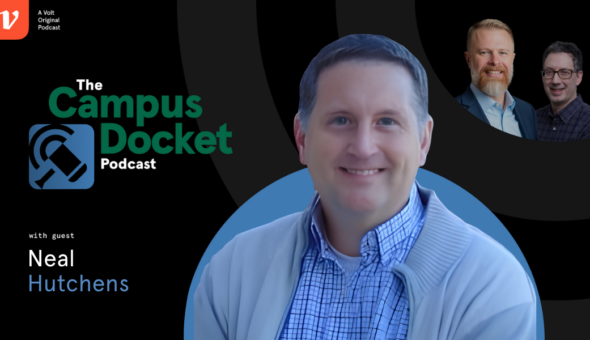
Yeah, I mean the content will keep evolving. We’ve talked about some of the changing topics and the and the more focus, but we’re playing with formats and channels too. So obviously we have a lot of articles on the website, both from practitioners and reporters. We have podcasts, Kevin. I don’t know if you know this, but yeah, I mean obviously Higher Voltage episodes are always fantastic. Teresa and Erin continued to do great things on Trusted Voices about school leadership and communication. Eric and Scott, I think, have the funniest education legal podcast with Campus Docket that I know about.
Kevin Tyler
That’s an accomplishment, to make legal higher education legal conversations funny. So yeah, that’s good.
Louis Miller
It’s true. It’s true. Yeah. Well, the only legal podcast I listen to, but they do a good job. I’m also really proud of what the Volt newsletter has become. And we talked about just like we’re focusing a lot on video now, creating more. We launched a new Instagram account within the past couple of weeks. You can find us @volt_highered. And yeah, this year we’ll be producing our first print magazine as well. We’re piloting regional in-person events. So yeah, I mean if it helps if it helps our community just get unstuck, we’ll try in whatever format makes sense. But yeah, also I’d love feedback from our readers and your listeners as well. If there are things that we are doing or not doing that you feel like would be valuable, or if you have an idea for something, let us know.
Kevin Tyler
Yeah, everybody, let them have it. I’ll add a suggestion box link to the episode page. I’m just kidding. But I’m sure that would be super helpful, right? Like we create these episodes thinking we are delivering what people need to hear or want to hear. But having that feedback is gonna be super important.
Louis Miller
I’m curious from you, Kevin. What do you, what do you think? Do you have any ideas of what content would be helpful or what gaps are there?
Kevin Tyler
You’re putting me on the spot here. I did not expect to. I’m the interviewer, man. I do think that the conversation around culture is still an opportunity around how we talk about culture on campus and what it means to be a part of a campus culture. what we are asking you to bring to it and what we are giving you from it. I think that the conversation around K-12’s kind of priming of prospective students. I think that is not only a K-12 conversation. I think it’s a higher education conversation as well. And so where can we start to seed these opportunities to reach into school systems to create tighter pipelines or tighter connection points between a district and an institution.
And I just think that delivering on the promise that has been given. I think that a lot of it’s not just the degree. That’s obviously the main output, but it’s not just that. And so how are we talking about those things in thoughtful ways that don’t feel stereotypically higher education-y, right? There, I think that there’s an appetite and opportunity for new ways of telling the story of higher education and what you get from it. That’s just off the top of my head though. So I don’t know, man. I think there’s lots of arteries to kind of explore, but those are the ones that come to mind most immediately.
Louis Miller
Yeah, I agree. I think there’s so many good pipeline considerations and partnership opportunities that yeah, if you look at dual enrollment for what that has done for community colleges, yeah, exploring that for four year schools I think would be fascinating.
Kevin Tyler
Yeah, 100%. I’m excited to hear that Volt will be on the road. The most recent newsletter, I think, you mentioned being at eduWeb later this month, which is exciting and awesome. And where else will folks be able to connect with Volt and you?
Louis Miller
Yeah, well, hopefully in your inbox, if you don’t subscribe to our newsletter, you’re missing out. But yeah, we’ll be at eduWeb in July. We will also be at AMA in November. We will be sharing a booth with Electric Kite. Come say hi in person. We’ll be taking videos, we’ll be handing out magazines. Obviously you can also follow us on LinkedIn, YouTube, Instagram, all the places, and of course keep listening to your favorite Volt podcasts.
Kevin Tyler
Great. I’m excited to run into you all at those spots. Unfortunately, I won’t be able to go to eduWeb this year, but I do plan on being at AMA and so would love to get some booth time as well. You know, we ask marketers of all stripes this question at the end of our chat, and that is the question everyone already knows is what do you think higher education looks like in five or ten years. And I’m really curious about your perspective on this as a connected but not institutional marketing leader. What your perspective is on what the future of higher education marketing looks like.
Louis Miller
Yeah, I mean it will obviously be very different than it is now. I think the obvious predictions are more consolidation. Smaller schools will feel it first. But I think the education experience is gonna change where I think the weekly 90 minute Gen Ed lecture to 200 students will probably go away and be replaced by some sort of AI assisted, personalized, one-to-one courses with dynamic progress, which I think will be a step forward for students as well. And I also think adult learners will become the majority on some college campuses. There are 36 million adults in the US with some college credit, but don’t have the final credential. That is a wide open niche for some schools willing to build an experience around someone who has one hour free after work and can help them complete their degree and makes that worthwhile and valuable for them. So yeah I think there’s gonna be more competitors coming onto the market. I’ve already seen some pretty slick new entrants that are branding themselves as completely AI universities that are coming on the market, which sounds awful, but they have a whole lot of venture funding. We will keep our eye on that. But my real hope is that higher ed just refocuses on the human experience and becomes a place that teaches Gen Z how to have fun and how to build experiences and knowledge away from screens and interact on a personal level again. So yeah, as a father of a daughter who’s now in that college search process, I think that is much needed for students right now.
Kevin Tyler
Well, speaking of, would you like to list the schools that really impressed you with their marketing and ones that didn’t? I’m just kidding. You don’t have to do that. I couldn’t agree with you more. I think that all that is right. What I think about is that the amount of brain power that exists in an institution, right? Like the world doesn’t move forward without higher education, essentially. I believe that. And so with these obstacles that have been put in the face of higher education, student loan caps, demographic cliffs, you know, research funding, all of these things, they seem insurmountable. But institutions have had to get through other things that have been very difficult. And like this is the time to use our brain power to get us out of the thicket of all of this thing. It’s gonna be very hard. It’s gonna be arduous and take, you know, a lot of time and there might be some casualties, but the absolute wrong thing is to do nothing and see how things go. And so I think that marketers stand on the front lines, of course, of that kind of navigation and strategy. And I’m excited to see some of the innovation in the storytelling, in the delivery and the formats and all of that that comes to pass because of the role that marketing has and the role that that marketing requires or the thinking that marketing requires in order to help an institution survive.
Louis Miller
Yeah, I mean the good news is that we know that education works. We know that by the process of improving your knowledge, improving your ability to apply that knowledge in a focused direction has the power to really improve people’s lives and livelihoods. So the practice of how colleges and universities are administrating that education does need to change. I think a lot of institutions have taken their eye off the ball over the decades. There was the opposite of the demographic cliff. It was the demographic mountain, I guess where we’re there’s more and more and more demand every year because the population is so yeah, I think we will have to evolve and and what that looks like a few years from now we’ll have to change to keep up with what people are looking for and making sure that they’re getting the best value for for what they’re paying for. But I agree we have the smartest people of any industry working with us and I’m confident that we’ll be able to figure it out.
Kevin Tyler
I am too. Louis Miller, thank you for joining me for this conversation. I’m excited to see how Volt evolves and to be a part of that evolution and see you out in the streets here soon, in the academic streets, I should say, at conferences and at these regional events. I’m excited about the future of this organization, and I’m really pleased that you’ve made time to have this conversation about what it’s gonna look like under your leadership.
Louis Miller
Kevin, thank you for having me. Thank you for being a part of Volt and I appreciate all you’re doing as well.
Kevin Tyler
Well, thank you.
That’s it for this week’s episode of Higher Voltage. We’ll be back soon with a new episode and until then you can find us on Twitter @VoltHigherEd and you can find me Kevin Tyler on Twitter @KevinCTyler2.