One week removed from the signature annual event for higher ed marketers, and one thing is crystal clear: It’s a wild time in higher ed. The American Marketing Association’s Symposium for the Marketing of Higher Education was a showcase of the innovation, camaraderie, anxiety and hope that are driving the industry today.
1: AI is everywhere and in every product, obviously.
Vendor booths (and some sessions, see below) sang out with promises of AI-powered, silo-busting, results-multiplying analytical and generative platforms that will give under-resourced teams veritable jetpacks of efficiency, and so on. Which isn’t to dismiss the utility of any of these products, but to underscore the point of how rapidly AI is transforming marketing, and in particular, martech — and that standing out in that space is incredibly challenging. This vibe led our own team to ponder where, exactly, we currently sit in the Dunning-Kruger Effect’s valley of despair when it comes to AI. We’ll let you know when we find out.
2: Real-world AI tutorials were a hit.
Conference sessions that delved into the use of readily available AI tools were informative. Element451’s Doug Smith and Forsyth Tech’s Hannah Wilson did a deep dive into NotebookLM, showing how the source-grounded generative platform (it pulls only from the information you upload to it, as opposed to anything it can find on the internet) can turn single documents or sources into a wide variety of outputs, including presentation slides, social media posts, and podcasts (among many others). The podcasts sparked a lot of conversation, with some in the audience wondering how many people want to hear a podcast narrated (complete with regularly placed natural-language interjections like ‘right?,’ ‘well,’ and ‘you know) by AI characters, and others noting that internal applications can include using the audio sessions as strategic debriefs for the car ride home from work.
Another demo that got our attention? A new integration from Pantheon that allows a Google Doc to be directly imported into a CMS, which could effort related to governance and uploading. This could be particularly useful for streamlining posts coming from non-regular CMS users, like faculty faculty members.
3. People are exhausted.
And it sure doesn’t feel like it’s going to get better anytime soon. Whether it was evident in casual conversations, passing remarks or just in general vibes, this tension was subtly omnipresent. The reasons for the exhaustion are fairly obvious: whether it’s AI or the seemingly shifting role and value of higher education in American culture, there is a tidal wave of change cresting the horizon that is There’s a tidal wave of change cresting the horizon that is simultaneously scary and exciting. Keynote speaker Todd Henry, host of the “Daily Creative” podcast tailored his words toward an audience teetering on the edge of burnout, urging them to stay manage their time and energy in self-sustaining ways that harness their creativity, build relationship and create forward momentum, both for their own wellbeing and because the stakes in higher ed have never been higher. “We need you to be on fire right now. We cannot abide mediocrity in this industry right now.”
4. ‘Student success is Job 1.’
Those were the words of Ted Mithcell, president of the American Council on Education. During a panel hosted by Trusted Voices podcast host Teresa Valerio Parrot, Mitchell argued that, in a time when people are skeptical of the value of a college degree, showing real, tangible stories of that value is imperative. Those outcomes include hard, transactional outcomes like jobs, but also the soft skills — of judgment, of rhetoric, of consideration — that you carry with you for life. “Student success is how we earn the right to do everything else,” he said.
5. The role of .edu websites is changing fast.
A session about the future of .edu websites cited survey data that indicated the structure of the typical admissions website doesn’t meet the needs of prospective students, who prioritize clear, accessible information around admissions and financial aid, including clear statements of the total sticker price of tuition, clear information about payment plans, and one stat some schools may not want to show: average student debt. For program pages, students want to see the career paths of actual alumni and student satisfaction rates, not rankings or salary outcomes, which they view as commodity data they can find elsewhere.
6. AI is changing the college search process, but so are humans.
Speaking of where prospective students get their information, U.S. News & World Report’s Brian Mitchell presented data around the increasing prominence of AI in their journeys. The polling shows that students increasingly use AI as to compare criteria across different institutions, particularly around cost and financial aid. But the flip side of that equation is that Gen Z has low trust in AI in general, leading them to lean into “analog” influences like family and college counselors, who are playing a growing role in driving decisionmaking.
7. Private equity is still changing the agency landscape.
One topic that came up quite apart from the conference programming was a bit of quiet chatter: As more agencies get investments from PE firms, the quality of their services is declining. Hardly a new story for private equity, but the fallout in higher ed marketing that we heard is that smaller agencies are picking up accounts from larger firms as institutions grow dissatisfied with the results of supposedly streamlined operations.
8. There may have been too much content.
As at any conference, some programming sang and some fizzled. But the sheer volume of programming at this year’s AMA — standard time blocks featured no less than a dozen sessions to choose from — bordered on overwhelming, at least to us, and made it difficult for attendees to choose which sessions to attend and created a sense of missing out, even if the sessions they attended were good. There were several presentations that brought truly valuable insights, as noted above, and the round table workshops and panel discussions were especially impactful formats. But some sessions felt more like commercial vehicles for agencies and platforms to sell their services, with barely a coherent throughline, as one presenter passed the clicker to the next, and not much by way of actual insights — except to buy services from the presenter. Getting caught in one of these made you really regret not going to other sessions during that time slot that sounded great.
AMA is the biggest higher ed marketing conference for a reason.
Despite our quibbles, AMA continues to be the biggest and most impactful conference for higher ed marcomm leaders. The programming generally is strong, of course, but one of the best features? The sheer numbers of attendees — the 2025 iteration brought over 1,600 guests — creates connections like no other.
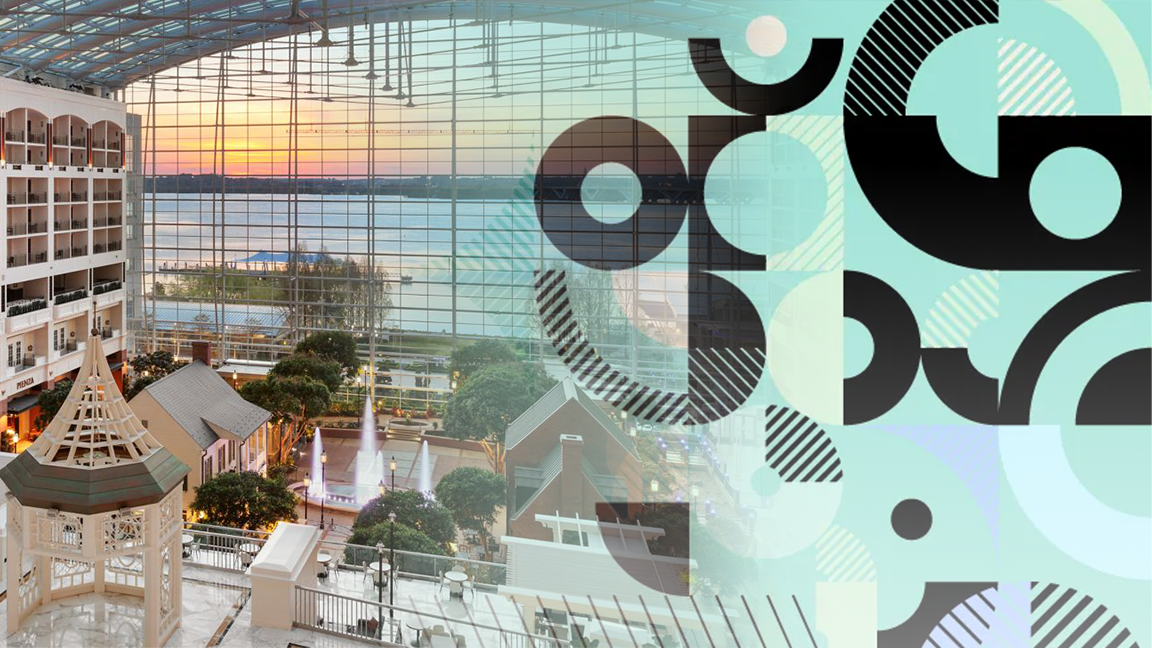
So while it may sound trite, the final takeaway we saw at AMA was heart-warming: Despite the fatigue, the uncertainty and the stress, the community of higher ed marketers is a tight one full of genuine friendships. Hugs and laughter on conference floors and over cocktails were as definitive of the total experience of the four-day event in National Harbor, Md. as anything else and, time and again, the strength of the higher ed marketing community was on full display. So, while challenges abound, it was hard to leave the conference and not feel refueled, optimistic and energized about the work that has to be done.
Editor’s note: Element451 is a previous partner of Electric Kite and Forsyth Tech is a current client of Electric Kite, which publishes Volt.