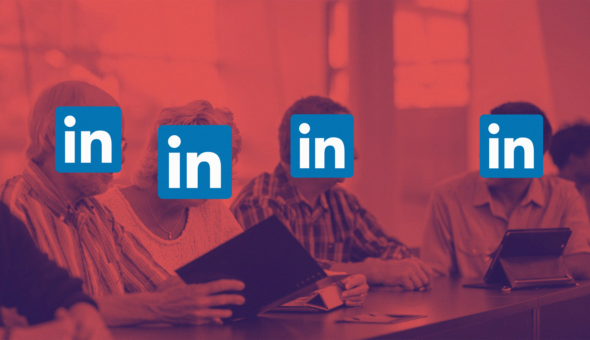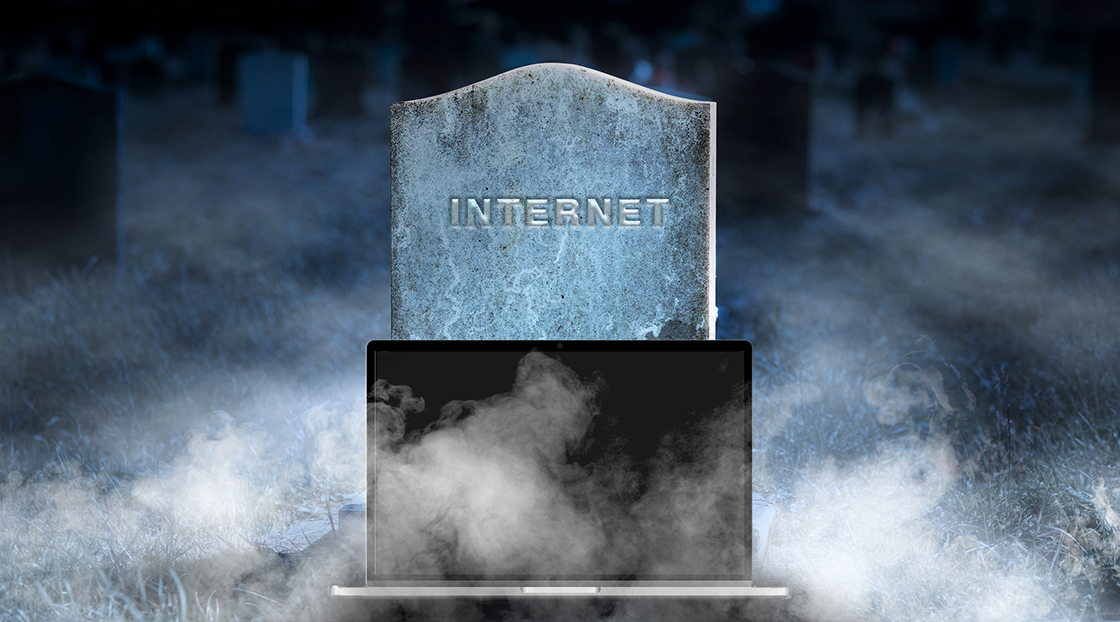
There’s this conspiracy that’s been kicking around the internet called the Dead Internet Theory. In a nutshell, it speculates that the internet consists mostly of bots that generate content manipulated by the algorithm to control the population and de-emphasize human activity.
I’ve found myself thinking more and more about this theory, and it’s not just because of the number of spam bots that I’ve come across. If you think about all the AI-driven content you see and the growing amount of “sponsored posts” that are active, the evidence of actual life online starts to feel a bit sparse.
To be clear, my biggest concern isn’t the manipulation part (even though that’s terrifying). As always, I’m more focused on what this idea means in terms of audience growth. Quite frankly, I have a couple of concerns:
- First, you have the issue of audiences potentially dwindling due to lack of real human connection within a digital space. To a certain extent, this is out of your control, but that doesn’t mean you should ignore it. We have to think about what this means for the future of our strategies, and figure out ways to address this looming problem.
- On the other side, the idea of zigging while everyone else is zagging could lead to a feeling of being left behind by these new technologies and being seen as outdated due to not adapting to what’s happening.
This feels like a terrible combination of issues. The very thing that could push audiences away is being touted as the technology of the future. And, if you push back against the change the response normally is some form of “We should probably just embrace the new technology, and not dig our heads in the sand.” I mean there have to be other options, right?
Well, yes there are.
First, take a step back and then take a deep breath. Now, ask yourself the following questions:
- How quickly can your team/office/department pivot when the situation calls for it? (And, if the answer is “not quick at all,” should you start working with stakeholders now to develop official contingency plans, so you can move quickly if needed?)
- How are younger audiences consuming content, and is your current strategy flexible enough to adapt without compromising your overall mission?
- Is change actually necessary or should you wait and see what happens?
- Finally, does your audience even want you to change?
As someone who has completely embraced the “go go go” we need to be first mentality, taking a step back is difficult. Adding to that, as someone who loves nothing more than the idea of innovation and change, asking “Why though?” is probably the hardest of all the parts. But, it’s a vital part of developing a strategy, while also being the easiest part to skip.
Think of it as having the proverbial two wolves inside of you.
The first wolf believes strongly in the idea that not all change is good. The foundation of any good plan starts with weighing the pros and cons of an idea. On top of that, you can never compromise who you are as an organization or institution for the sake of simply keeping up with what could possibly be a trend.
The second wolf believes to its very core that just because something is scary or has a few negatives, doesn’t mean you should write it off completely. To stay relevant, it is our responsibility to be in a constant state of exploring, experimenting, and learning.
Listen, I don’t really think the internet is dead (yet), but I would be lying if I said the new tools and “best practices” aren’t making things feel a bit monotonous. So, my final bit of advice would be to embrace what you can, reject what you must, and never lose sight of your overall purpose.
Oh and one more thing! I know SEO — and AEO/GEO — is really important, but never allow the quest for optimization make you lose sight of the fact you create content for humans.
You can pop up in as many searches as you want, but if the content isn’t good, none of that matters.